How To Bake Skirt Steak In Oven With Perfect Results
Baking skirt steak in the oven is one of the easiest ways to get tender, juicy beef without firing up the grill. This guide walks you through everything from choosing the right cut to pulling it off the heat at the perfect moment. You will learn the ideal oven temperature, marinating tricks, and slicing techniques that turn a simple steak into a restaurant-worthy meal.
There is something deeply satisfying about pulling a perfectly cooked steak out of the oven. The kitchen smells incredible, the meat rests on the cutting board with a beautiful crust, and you know you are about to eat something truly delicious. baking skirt steak in oven is one of those kitchen skills that feels impressive but is surprisingly easy to master.
Skirt steak is a cut that loves the oven. It is thin, flavorful, and cooks quickly at high heat. Unlike thicker steaks that require careful monitoring, skirt steak forgives small mistakes and still turns out wonderful. Whether you are a beginner cook or someone looking for a faster weeknight dinner, oven-baked skirt steak should be your go-to method.
In this guide, I will walk you through every step. From picking the right cut at the store to slicing it like a pro, you will have everything you need. We will cover temperatures, marinades, seasoning blends, and all the little tricks that separate good steak from great steak. By the end, you will feel confident enough to make this dish on any given Tuesday night.
Key Takeaways
- Oven-baked skirt steak is simple and forgiving: You do not need a grill or special equipment to get great results.
- High heat is the secret: Baking at 450°F to 500°F gives you a caramelized crust while keeping the inside juicy.
- Marinating matters: Even a quick 30-minute soak in acid and oil transforms the flavor and tenderness of your steak.
- Rest your steak before slicing: Letting it sit for 5 to 10 minutes locks in the juices and prevents dryness.
- Slice against the grain: This single step makes the biggest difference in how tender each bite feels.
- Internal temperature is your guide: Aim for 130°F to 135°F for medium-rare, which is the sweet spot for skirt steak.
- Leftovers are versatile: Oven-baked skirt steak works beautifully in tacos, salads, stir-fries, and sandwiches the next day.
📑 Table of Contents
- Why Baking Skirt Steak In The Oven Works So Well
- How To Prepare Your Skirt Steak For Baking
- The Best Oven Temperature And Timing For Skirt Steak
- Step-By-Step Guide To Baking Skirt Steak
- Marinades And Seasonings That Elevate Skirt Steak
- Serving Ideas And Storing Your Oven-Baked Skirt Steak
- Skirt Steak Versus Other Cuts For Oven Baking
- Frequently Asked Questions
- Conclusion
Why Baking Skirt Steak In The Oven Works So Well
Not everyone owns a grill. And even if you do, sometimes the oven is simply the better choice. cooking skirt steak in oven gives you more control over the heat, which means more consistent results. Let us look at why this method has become so popular among home cooks.
Even Heat Distribution
When you place a skirt steak in a hot oven, the heat surrounds the meat on all sides. This is different from a stovetop, where only the bottom gets direct contact with the heat source. The oven wraps the steak in consistent warmth, which helps it cook evenly from edge to center.
For a thin cut like skirt steak, this even heating is a game-changer. You avoid those annoying hot spots that can overcook one part while leaving another underdone. The result is a steak that is done from edge to edge, with a beautiful sear on the outside.
Better Crust Formation
Oven roasting at high temperatures creates something called the Maillard reaction. That is a fancy way of saying the surface of the meat browns and develops complex, savory flavors. A hot oven at 450°F or above gives you that deep, caramelized crust without needing to sear it separately on the stove.
This crust is what makes oven-baked beef so satisfying. It adds texture and depth that you simply cannot get from boiling or slow-cooking methods. The outside becomes crisp and flavorful while the inside stays tender and juicy.
Less Hassle, More Flavor
One of the biggest advantages of using the oven is simplicity. You do not need to flip the steak constantly or hover over a hot pan. You season it, place it on a sheet pan, and let the oven do the work. This hands-off approach means you can prep a side dish, set the table, or pour yourself a drink while the steak cooks.
Many people also find that oven-baked steak tastes better than pan-seared versions. The longer, more even exposure to heat allows the interior to reach a consistent temperature throughout. There is no gray band of overcooked meat between the crust and the center.
How To Prepare Your Skirt Steak For Baking
Good preparation sets the stage for a perfect steak. Taking a few extra minutes before the steak hits the oven makes a noticeable difference in the final result. Here is exactly what to do.
Choosing the Right Skirt Steak
At the butcher counter or grocery store, you will usually find two types of skirt steak: inside and outside. The outside skirt steak is thicker, more tender, and generally considered the better choice for oven baking. The inside skirt steak is thinner and a bit more fibrous, but it still works well.
Look for a piece that is about 1 to 1.5 pounds. The color should be a deep red with thin white lines of fat running through it. Avoid pieces that look gray or have a strong odor. Fresh skirt steak should smell mildly beefy, not sour or ammonia-like.
Trimming and Flattening
Once you have your steak, lay it flat on a cutting board. Use a sharp knife to trim away any large, thick pockets of fat. You do not need to remove every bit of fat, but big chunks can cause flare-ups and uneven cooking.
If the steak has a thick membrane on one side, gently lift it with the tip of your knife and pull it off with a paper towel. This membrane can be tough and chewy after baking. Removing it gives you a more tender result.
Some cooks like to pound the steak to an even thickness using a meat mallet. This is optional but helpful, especially if one end of the steak is noticeably thicker than the other. Even thickness means even cooking, which is the goal here.
Bringing the Steak to Room Temperature
This is a step many people skip, but it matters. Take your skirt steak out of the refrigerator about 30 minutes before baking. Let it sit on the counter, uncovered, while you preheat the oven.
A steak that starts at room temperature cooks more evenly than one that goes straight from the fridge to the oven. The cold center of a refrigerated steak takes much longer to reach the target temperature, which can lead to an overcooked exterior before the interior is done.
The Best Oven Temperature And Timing For Skirt Steak
Temperature control is the single most important factor in how to bake skirt steak in oven successfully. Too low and you dry it out. Too high and you burn the outside before the inside catches up. Here is what works best.
Recommended Temperature Settings
The ideal oven temperature for skirt steak is 450°F to 500°F. At this range, the outside sears quickly while the inside stays moist. I personally prefer 475°F as a reliable middle ground that works well for most skirt steaks.
If your oven runs hot, stick with 450°F. If it tends to run cool, go with 500°F. Every oven is slightly different, so getting to know yours is part of the process. An oven thermometer can be a cheap and useful tool if you are unsure about your oven’s actual temperature.
Timing Guidelines
Skirt steak is thin, so it does not take long to bake. Here is a general timing guide:
- Rare (120°F to 125°F): 6 to 8 minutes at 475°F
- Medium-Rare (130°F to 135°F): 8 to 10 minutes at 475°F
- Medium (140°F to 145°F): 10 to 12 minutes at 475°F
These times assume a steak that is about 1 inch thick. Thinner steaks will cook faster, and thicker ones will take a bit longer. The best way to know for sure is to use a meat thermometer. This removes all guesswork and takes the pressure off.
Using a Meat Thermometer
A digital instant-read thermometer is the single best investment for any home cook. Insert it into the thickest part of the steak, making sure the probe is in the center and not touching the pan. The reading should be stable within 15 seconds.
Remember that the steak’s temperature will rise 5 to 10 degrees after you pull it out. This is called carryover cooking. So if you want medium-rare at 135°F, pull the steak at 130°F. It will continue cooking gently as it rests on the cutting board.
Step-By-Step Guide To Baking Skirt Steak
Now that you understand the why behind each step, here is the full process laid out clearly. Follow these steps and you will have a perfect oven-baked skirt steak every time.
Step 1: Preheat and Prep
Preheat your oven to 475°F. While the oven is warming up, line a baking sheet with foil or parchment paper. Place a wire rack on top if you have one. The rack allows hot air to circulate around the steak, which promotes even browning.
Step 2: Season Generously
Pat the steak dry with paper towels. This might seem counterintuitive, but dry surfaces brown better than wet ones. Sprinkle kosher salt and freshly cracked black pepper on both sides. Add any other seasonings you like, such as garlic powder, smoked paprika, or cumin.
For a deeper flavor, apply your skirt steak marinade at this stage. Let the steak sit with the seasoning for at least 15 minutes while the oven preheats. This short rest allows the salt to draw out moisture, which then gets reabsorbed and tenderizes the meat.
Step 3: Bake and Monitor
Place the seasoned steak on the prepared sheet pan or rack. Slide it into the preheated oven on the center rack. Set a timer for 8 minutes and check the internal temperature. Do not open the oven door too often, as each opening drops the oven temperature.
When the thermometer reads 5 degrees below your target temp, pull the steak out. The carryover heat will bring it up to the perfect doneness.
Step 4: Rest the Steak
Transfer the steak to a cutting board and let it rest for 5 to 10 minutes. This step is non-negotiable. During cooking, the juices in the meat get pushed toward the center. Resting allows them to redistribute evenly throughout the steak.
If you skip the resting step and slice immediately, all those juices will run out onto the cutting board instead of staying in the meat. You will end up with a drier, less flavorful steak.
Step 5: Slice and Serve
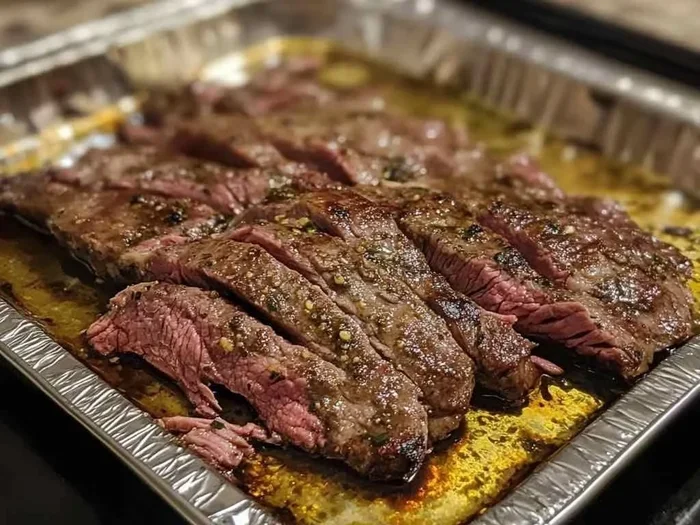
Use a sharp knife to slice the steak against the grain. The grain is the direction of the muscle fibers. You can usually see these lines running along the surface of the steak. Cutting perpendicular to them shortens the fibers, making each bite much more tender.
Slice the steak into strips about 1/4 to 1/2 inch wide. For fajitas or tacos, cut them into thin strips. For serving over rice or salad, slightly thicker pieces work well.
| Doneness | Pull Temp | Final Temp | Time at 475°F (1-inch thick) |
|---|---|---|---|
| Rare | 115°F | 120-125°F | 6-8 min |
| Medium-Rare | 125°F | 130-135°F | 8-10 min |
| Medium | 135°F | 140-145°F | 10-12 min |
This table shows approximate values. Always rely on a meat thermometer for the most accurate results.
Marinades And Seasonings That Elevate Skirt Steak
Skirt steak has a bold, beefy flavor that pairs well with almost any seasoning. But a thoughtful marinade or rub can take it from great to unforgettable. Here are some of my favorite combinations for oven-baked skirt steak.
Classic Mexican-Inspired
This is the go-to for fajitas and tacos. Combine lime juice, olive oil, minced garlic, cumin, chili powder, smoked paprika, and a pinch of oregano. Marinate the steak for at least 30 minutes, or up to 2 hours in the refrigerator. The acid in the lime juice tenderizes the meat while the spices build a deep, smoky flavor.
Simple Garlic and Herb
For a more classic approach, mix minced garlic, butter, fresh rosemary, thyme, salt, and pepper. Brush this mixture onto the steak before baking. The herbs infuse the meat with a rich aroma that pairs beautifully with roasted vegetables or mashed potatoes.
Asian-Inspired Glaze
Combine soy sauce, sesame oil, rice vinegar, honey, and grated ginger. This marinade adds a sweet-savory balance that works wonderfully with beef skirt steak. Marinate for 30 minutes to 1 hour for the best results.
Quick Dry Rub Option
If you do not have time to marinate, a simple dry rub works beautifully too. Mix brown sugar, smoked paprika, garlic powder, onion powder, salt, and black pepper. Rub it generously onto both sides of the steak and let it sit for 15 minutes before baking. The sugar helps create a beautiful caramelized crust.
Common Mistakes To Avoid With Marinades
- Marinating too long in acidic marinades: More than 4 hours of lime juice or vinegar can make the surface of the steak mushy.
- Skipping the drying step: Wet surfaces do not brown well. Always pat the steak dry before applying seasoning.
- Using too much salt in the marinade: Salt draws moisture out of the meat. Keep the salt level moderate in the marinade and finish with salt after baking.
- Marinating at room temperature: Always marinate in the refrigerator to keep the meat at a safe temperature.
Serving Ideas And Storing Your Oven-Baked Skirt Steak
One of the best things about baked skirt steak is how versatile it is. You can serve it in many different ways depending on the occasion and your mood.
Serving Suggestions
For a casual weeknight dinner, slice the steak and serve it over rice with sautéed peppers and onions. For a more elevated meal, plate it alongside roasted sweet potatoes and a crisp arugula salad. Skirt steak also shines in sandwiches. Pile the sliced meat onto a crusty roll with some pickled jalapeños, avocado, and a drizzle of chipotle mayo.
Skirt steak fajitas are a classic for a reason. Serve the sliced steak with warm tortillas, guacamole, sour cream, and fresh pico de gallo. Let everyone build their own tacos for a fun and interactive meal.
Storing Leftovers Properly
Leftover oven-baked beef stores well in the refrigerator. Place the sliced steak in an airtight container and refrigerate within 2 hours of cooking. It will keep for up to 3 to 4 days.
To reheat, use a skillet over medium heat with a splash of beef broth. This method keeps the steak moist and prevents it from drying out in the microwave. You can also reheat sliced steak in a tortilla for a quick and delicious lunch the next day.
Freezing Cooked Skirt Steak
If you have more leftovers than you can eat in a few days, freezing is your friend. Wrap the sliced steak tightly in plastic wrap, then place it in a freezer-safe bag. It will keep for up to 3 months. Thaw overnight in the refrigerator before reheating.
Expert Tips From Professional Chefs
Professional chefs who work with skirt steak regularly share a few insights that can level up your home cooking:
- Never skip the resting step. Chef Marco says, “Resting is where the magic happens. It is the difference between good steak and great steak.”
- Slice thin for maximum tenderness. Thinner slices are easier to chew and absorb sauces and marinades better.
- Season at least 40 minutes before cooking. This gives the salt time to penetrate the meat, rather than just sitting on the surface.
- Use a cast iron skillet for reheating. The even heat retention of cast iron keeps the steak crispy on the outside while warming the inside gently.
These small details might seem minor, but they add up to a significantly better eating experience. The more you practice how to bake skirt steak in oven, the more naturally these steps will become part of your routine.
Common Mistakes That Ruin Oven-Baked Skirt Steak
Even experienced cooks can fall into habits that lead to less-than-perfect results. Here are the most common mistakes and how to avoid them:
- Using too high a temperature: While skirt steak needs high heat, going above 500°F can burn the outside before the inside reaches a safe temperature. Stick to 450°F to 500°F.
- Not using a meat thermometer: Guessing doneness leads to either overcooked, tough steak or undercooked meat that is unsafe to eat. A thermometer takes the guesswork out completely.
- Cutting with the grain: This is the number one mistake people make when slicing skirt steak. Always cut against the grain for a tender bite.
- Overcrowding the pan: If the steak is crowded or folded on the pan, steam builds up instead of heat circulating. This prevents a good crust from forming.
- Forgetting to bring the steak to room temperature: A cold steak in a hot oven cooks unevenly. The outside overcooks while the center stays cold.
By knowing these pitfalls ahead of time, you can steer clear of them and consistently produce excellent results. Oven-baked skirt steak is a forgiving cut, but these details still matter.
Skirt Steak Versus Other Cuts For Oven Baking
Not all steaks are created equal when it comes to oven baking. Skirt steak has unique qualities that make it particularly well-suited for this cooking method. Let us compare it to a couple of other popular cuts.
Skirt Steak vs Flank Steak
Flank steak is often compared to skirt steak because they share some similarities. Both are lean, flavorful cuts that benefit from high-heat cooking. However, flank steak is thicker and has a more pronounced grain pattern. It also takes a bit longer to cook in the oven.
Skirt steak is thinner and more tender, which makes it a better choice for quick oven roasting. If you want a faster cook time and a more delicate texture, go with skirt steak. If you prefer a heartier, chewier bite, flank steak is your pick.
Skirt Steak vs Hanger Steak
Hanger steak is sometimes called the butcher’s secret because it was rarely sold commercially. It is incredibly tender and has a rich, beefy flavor. Hanger steak works well in the oven but is harder to find and more expensive than skirt steak.
For everyday cooking, oven-baked skirt steak offers the best balance of flavor, tenderness, availability, and affordability. It is the cut I reach for most often when I want a delicious steak without the fuss.
Frequently Asked Questions
Can I bake skirt steak at 350°F instead of 450°F?
You can, but the results will be different. A lower temperature like 350°F will cook the steak more slowly and evenly, but it will not develop the same caramelized crust. For the best texture and flavor, I recommend sticking with 450°F to 500°F. If you must use a lower temperature, increase the cooking time and check the internal temperature frequently.
How long should I marinate skirt steak before baking it in the oven?
30 minutes is the minimum for a noticeable flavor difference. For deeper penetration, marinate for 2 to 4 hours in the refrigerator. Do not exceed 8 hours with acidic marinades like lime juice or vinegar, as they can break down the meat fibers and create a mushy texture.
Is skirt steak the same as flank steak?
No, they are different cuts from different parts of the cow. Skirt steak comes from the diaphragm muscle and is thinner, more tender, and has a looser grain. Flank steak comes from the abdominal muscles and is thicker with a tighter, more pronounced grain. Both work well for oven baking, but skirt steak cooks faster and is generally more forgiving.
What internal temperature should skirt steak reach when baked?
For medium-rare, pull the steak at 130°F. The internal temperature will rise to 135°F during the resting period. Medium-rare is widely considered the best doneness for skirt steak because it balances tenderness and flavor. If you prefer your steak more well-done, aim for 145°F to 150°F, but be aware that the meat will be less juicy.
Can I use frozen skirt steak for oven baking?
It is best to thaw the steak first. Place it in the refrigerator overnight or submerge it in cold water for about 30 minutes. Baking a frozen steak leads to uneven cooking, with the outside overcooking while the center remains frozen. For the best oven-baked skirt steak results, always start with a properly thawed piece of meat.
How do I know when my skirt steak is done without a thermometer?
Without a thermometer, use the touch test. Press the center of the steak with your finger. If it feels soft and squishy, it is rare. If it feels firm but gives slightly, it is medium-rare. If it feels firm with no give, it is well-done. This method takes practice, and a thermometer will always give you more reliable results.
Conclusion
Baking skirt steak in oven is one of the simplest and most rewarding cooking techniques you can learn. It requires minimal equipment, very little hands-on time, and delivers consistently delicious results. Once you understand the basics of temperature, timing, and resting, you will never go back to overcooked, dry steak again.
The beauty of this method lies in its flexibility. You can keep it simple with just salt and pepper, or go all out with a complex marinade. You can serve it in tacos, over rice, on a salad, or on its own with a side of roasted vegetables. Oven-baked skirt steak adapts to whatever you need on any given day.
Start with the steps outlined in this guide, pay attention to the internal temperature, and always slice against the grain. These three practices alone will transform your steak-cooking game. As you gain confidence, experiment with different seasonings, marinades, and serving styles. The more you cook, the more intuitive it becomes.
Remember that even experienced cooks have off days. The steak might not turn out perfectly the first time, and that is okay. Every attempt teaches you something new. Keep practicing, trust the process, and soon baking skirt steak in oven will feel like second nature. You have got this, and your next dinner is going to be delicious.