How To Operate French Press Coffee Maker Like A Pro
Operating a French press coffee maker is simple, rewarding, and produces incredibly rich coffee. This guide walks you through every step from choosing the right press to perfecting your brew. You will learn precise techniques, timing, and tips that turn ordinary coffee into a barista-level experience at home.
There is something truly special about a morning cup of French press coffee. The rich aroma, the full body, the depth of flavor — nothing else quite compares. Whether you are a casual coffee drinker or a dedicated enthusiast, learning how to operate a French press coffee maker will change the way you enjoy coffee forever.
A French press is one of the simplest and most affordable coffee brewing tools you can own. Yet, many people still do not know how to use it properly. They end up with weak, bitter, or gritty coffee and give up on this wonderful method entirely. That is a real shame because a well-made French press brew is genuinely extraordinary.
This guide will show you exactly how to operate a French press coffee maker like a professional. We will cover everything from selecting the right equipment to mastering your technique. By the end, you will have all the knowledge you need to brew café-quality coffee in your own kitchen every single day.
Key Takeaways
- Choose the right French press: Glass and stainless steel options each offer unique benefits for flavor and durability.
- Use coarse grounds: A proper grind size is the single most important factor for a clean, grit-free cup.
- Master the water temperature: Brewing between 195°F and 205°F extracts the best flavors without bitterness.
- Follow the four-minute rule: Steeping time directly impacts strength, aroma, and overall coffee quality.
- Clean your press regularly: Proper maintenance keeps your French press coffee maker performing at its best for years.
- Experiment with ratios: Adjusting coffee-to-water ratios lets you customize strength and flavor to your personal taste.
📑 Table of Contents
What Is a French Press Coffee Maker
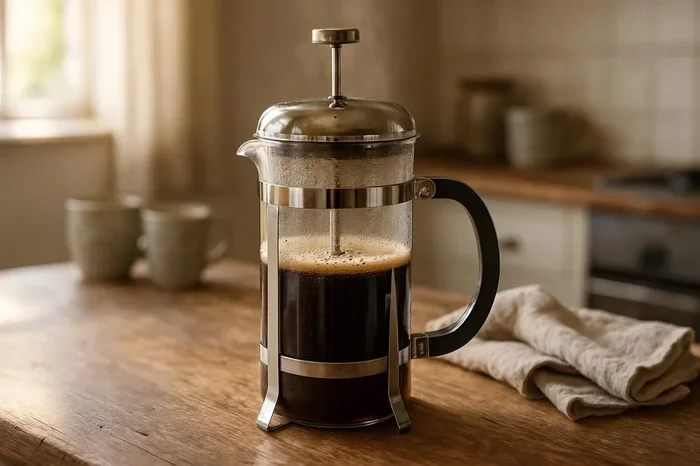
A French press is a simple immersion brewing device. It consists of a cylindrical pot, usually made of glass or stainless steel, with a plunger and a mesh filter on top. You add coffee grounds and hot water, let them steep together, and then press the plunger down to separate the grounds from the liquid.
The beauty of this method lies in its simplicity. There are no paper filters, no complicated machines, and no electricity required. The mesh filter allows natural oils and fine particles to pass through, which gives French press coffee its signature rich, full-bodied character. This is what sets it apart from drip coffee or pour-over methods.
The concept has been around for centuries, though the modern design we know today became popular in the 1920s. Today, French press coffee makers come in all shapes and sizes, from single-serve cups to large carafes that can serve a whole family. They are a staple in kitchens around the world.
Choosing the Right French Press
Before you start brewing, you need the right equipment. Not all French press coffee makers are created equal, and choosing the wrong one can affect your experience more than you might think.
Glass vs Stainless Steel
Glass French presses are the classic choice. They look beautiful on a kitchen counter and let you watch the coffee steep. Glass does not retain flavors, so each cup tastes clean and pure. The downside is fragility. A dropped glass press will shatter, and hot liquids can make this dangerous.
Stainless steel French presses are incredibly durable. They retain heat better than glass, which can help maintain brewing temperature. Many people prefer them for travel or outdoor use. However, steel can retain some flavor over time if not cleaned properly, and you cannot see the coffee as it steeps.
Size Matters
French press coffee makers come in several sizes. A single-cup press holds about 12 ounces and is perfect for one person. A standard 34-ounce press serves three to four cups. If you entertain often or have a large household, consider a 51-ounce or larger carafe.
Choose a size that matches your daily habits. It is always better to have a slightly larger press than one that is too small. Overfilling a press can make it difficult to press the plunger down smoothly.
What to Look For
When shopping for a French press coffee maker, look for these features:
- A sturdy, well-fitting lid with a seal
- A smooth-acting plunger mechanism
- A fine mesh filter that catches most grounds
- Heat-resistant construction if using glass
- A comfortable handle that stays cool
Brands like Bodum, Frieling, and Espro offer excellent options at various price points. You do not need to spend a fortune to get a great press, but investing in quality pays off in the long run.
Step-by-Step Guide to Operating a French Press
Now for the fun part. Here is exactly how to operate a French press coffee maker to get the best possible cup every time. Follow these steps carefully, and you will notice a huge difference in flavor and texture.
Step One: Measure Your Coffee
Start by measuring your coffee beans. The standard ratio for French press coffee is one tablespoon of ground coffee per four ounces of water. For a standard 34-ounce press, that means about eight to nine tablespoons of grounds.
If you prefer a stronger cup, add an extra half tablespoon. If you like it milder, use a little less. The beauty of the French press is that you have complete control over the strength. Experiment until you find your perfect ratio.
Step Two: Grind the Beans
This step is critical. You need a coarse grind for a French press. The grounds should look similar to sea salt or rough breadcrumbs. If you use a fine grind, the coffee will be gritty and over-extracted. A burr grinder gives you the most consistent results, but any grinder that can produce a coarse setting will work.
Grind your beans just before brewing for the freshest possible flavor. Pre-ground coffee loses its aroma quickly, and stale grounds produce flat, lifeless coffee. If you must use pre-ground, store it in an airtight container and use it within a week.
Step Three: Heat the Water
Bring your water to the right temperature. The ideal range for brewing French press coffee is between 195°F and 205°F. Water that is too hot will over-extract the grounds and create bitterness. Water that is too cool will under-extract and produce weak, sour coffee.
If you do not have a thermometer, simply bring the water to a boil and then let it sit for about 30 seconds. This brings it into the sweet spot. Always use filtered water if possible, since the quality of your water directly affects the taste of your coffee.
Step Four: Add Grounds and Water
Place your French press coffee maker on a stable surface. Add the ground coffee to the bottom of the pot. Then pour the hot water evenly over the grounds. Start with a small amount of water and stir gently to saturate all the grounds. This is called the “bloom” and it allows the coffee to release trapped gases.
After the bloom, pour in the remaining water. Place the lid on top with the plunger pulled all the way up. Do not press down yet. The coffee needs time to steep and develop its full flavor.
Step Five: Steep for Four Minutes
Set a timer for four minutes. This is the standard steeping time for French press coffee. Four minutes allows for optimal extraction without pulling out too many bitter compounds.
If you prefer a stronger brew, you can steep for five minutes. Going beyond five minutes usually results in over-extraction and bitterness. Some people like a shorter steep of three minutes for a lighter, more delicate cup. Find what works best for your taste.
Step Six: Press and Pour
When the timer goes off, it is time to press. Apply slow, steady pressure to the plunger. Do not rush this step. A quick, jerky press can disturb the grounds and make your coffee cloudy and gritty.
Once the plunger is fully pressed down, pour the coffee immediately into your cup or serving mug. Do not leave the coffee sitting in the press, as it will continue to extract and become increasingly bitter. A good French press coffee maker should pour smoothly without dripping or spilling.
Tips for Perfect French Press Coffee
Even after mastering the basic steps, there are several pro tips that can elevate your coffee from good to exceptional. These small adjustments make a big difference.
Preheat Your Press
Before you add any coffee or water, pour hot water into the empty press and let it sit for 30 seconds. Then discard the water. This warms the glass or steel and helps maintain a stable brewing temperature. A cold press can drop the water temperature too quickly, leading to uneven extraction.
Use Fresh, Quality Beans
The quality of your beans matters enormously. Buy whole beans from a reputable roaster and use them within two to four weeks of the roast date. Store them in an airtight container away from light and heat. Fresh beans produce vibrant, complex flavors that stale beans simply cannot match.
Do Not Skip the Bloom
The bloom is that initial stir when you add a small amount of water to the grounds. It allows carbon dioxide to escape and ensures even saturation. Skipping the bloom can result in uneven extraction, where some grounds are over-extracted and others are under-extracted.
Experiment with Brew Times
While four minutes is the standard, do not be afraid to experiment. Try three minutes for a lighter cup or five minutes for something bolder. Keep a log of your experiments so you can replicate your favorites. This is how you truly learn how to operate a French press coffee maker like a pro.
Keep Your Ratios Consistent
Once you find a ratio you love, stick with it. Consistency is key to great coffee. Use a kitchen scale to measure both water and grounds by weight for the most precise results. A scale eliminates the guesswork and ensures every cup is the same.
Common Mistakes to Avoid
Even experienced coffee lovers make mistakes with their French press coffee maker. Here are the most common errors and how to avoid them.
- Using a fine grind: This is the number one mistake. Fine grounds slip through the mesh filter and create a gritty, unpleasant texture. Always use a coarse grind.
- Using boiling water: Water straight off the boil is too hot and will scorch the coffee, creating harsh bitterness. Let it cool for 30 seconds before pouring.
- Steeping too long: Leaving the coffee in the press for more than five minutes leads to over-extraction. Pour it out as soon as the steeping time is complete.
- Pressing too fast: A rushed press disturbs the grounds and clouds the coffee. Slow, steady pressure produces a cleaner cup.
- Ignoring the filter: A dirty mesh filter lets fine particles through and can harbor old oils that turn rancid. Clean your filter thoroughly after every use.
- Using old coffee: Stale beans produce flat, uninspiring coffee. Always check the roast date and use fresh beans for the best results.
Cleaning and Maintaining Your French Press
A well-maintained French press coffee maker lasts for years and brews better coffee over time. Cleaning is simple but should not be neglected.
Daily Cleaning
After each use, disassemble the plunger and rinse all parts with warm water. Use a soft brush to clean the mesh filter and remove any trapped grounds. Never put a glass French press in the dishwasher, as the heat can cause it to crack. Hand washing is always the best approach.
Deep Cleaning
Once a week, give your press a thorough deep clean. Soak the plunger and filter in warm, soapy water for 15 minutes. Use a bottle brush to scrub away any built-up oils or residue. For stubborn stains, a mixture of baking soda and water works wonders.
Stainless steel presses can sometimes develop a metallic taste if not cleaned properly. A rinse with white vinegar followed by plain water helps eliminate any lingering odors or flavors.
Replacing Parts
The mesh filter on a French press coffee maker will eventually wear out. When you notice grounds slipping through or the filter looking frayed, it is time for a replacement. Most manufacturers sell replacement filters, and they are inexpensive. Replacing the filter regularly ensures the cleanest possible cup.
Why French Press Coffee Is Worth the Effort
In a world of quick single-serve pods and automatic drip machines, the French press might seem old-fashioned. But that is exactly what makes it special. There is something deeply satisfying about brewing a full, rich cup of coffee with your own hands. The process is meditative, the results are exceptional, and the simplicity is refreshing.
A French press coffee maker gives you complete control over every variable. You choose the beans, the grind, the water temperature, and the steeping time. No machine can replicate that level of personal customization. Every cup becomes a reflection of your skill and your taste.
Once you learn how to operate a French press coffee maker properly, you will never go back to mediocre coffee. The difference in flavor, aroma, and body is remarkable. It is one of the easiest upgrades you can make to your daily routine.
Start with the basics, practice consistently, and soon enough you will be brewing coffee that rivals your favorite café. The journey from beginner to pro is shorter than you think, and every cup you brew brings you one step closer. Enjoy the process, savor the flavor, and make each morning a little brighter with a perfect cup of French press coffee.
For more great kitchen tips and recipes, you might also enjoy our articles on how to clean oven with burnt food, how to bake cheesecake in oven, and how to make oven baked macaroni and cheese.
Those articles cover essential kitchen skills that complement your coffee routine. Learning how to maintain a clean oven, bake a perfect cheesecake, and make creamy mac and cheese all contribute to a well-rounded kitchen experience. Each one builds on the same principles of patience, precision, and practice that make great French press coffee possible.
Frequently Asked Questions
What is the best grind size for a French press coffee maker?
The best grind size is coarse, similar to sea salt or rough breadcrumbs. A coarse grind prevents fine particles from slipping through the mesh filter and keeps your coffee clean and grit-free. Using a burr grinder gives you the most consistent results.
How long should I steep French press coffee?
The standard steeping time is four minutes. This allows for optimal extraction without over-extracting the grounds. You can adjust to three minutes for a lighter cup or five minutes for a stronger brew, but going beyond five minutes usually creates bitterness.
Can I use tap water for my French press coffee?
You can, but filtered water produces better results. The quality of your water directly affects the taste of your coffee. Tap water with heavy chlorine or mineral content can interfere with the natural flavors of the beans. Filtered water gives you a cleaner, truer taste.
How often should I clean my French press?
You should rinse your French press after every single use and do a deep clean at least once a week. Regular cleaning prevents oil buildup and keeps your coffee tasting fresh. A clean press also lasts much longer than a neglected one.
Is French press coffee stronger than drip coffee?
French press coffee often tastes stronger and more full-bodied because the mesh filter allows natural oils and fine particles to remain in the cup. However, the caffeine content is similar to drip coffee. The perceived strength comes from the richer flavor profile and fuller mouthfeel.
Can I reheat French press coffee?
It is best to drink French press coffee immediately after brewing. Reheating it can cause the flavors to turn bitter and flat. If you have leftover coffee, store it in a separate thermos and drink it within an hour for the best taste.
=== CONCLUSION ===
Operating a French press coffee maker is one of the simplest yet most rewarding skills you can develop in the kitchen. With the right equipment, the proper technique, and a little practice, you can brew coffee that is rich, aromatic, and completely satisfying. The steps are easy to follow, the process is enjoyable, and the results are consistently excellent.
Remember to use coarse grounds, heat your water to the right temperature, steep for four minutes, and press slowly. These small details make all the difference. Keep your press clean, experiment with ratios and brew times, and never settle for stale beans.
The journey to mastering your French press coffee maker is a rewarding one. Each cup you brew teaches you something new. Soon, you will not even need a guide — your instincts and your taste will guide you. Enjoy every sip and the simple pleasure of a perfect morning coffee.