How To Descale Cuisinart Drip Coffee Maker The Easy Way
Descaling your Cuisinart drip coffee maker is essential for keeping your coffee tasting fresh and your machine running smoothly. This guide walks you through the entire process using simple household items like white vinegar and water. You will learn the step-by-step method, common mistakes to avoid, and tips to prevent mineral buildup in the future.
Descaling your Cuisinart drip coffee maker might seem like a chore, but it is one of the easiest ways to keep your morning cup tasting amazing. Over time, minerals from water build up inside your machine. This buildup, also called calcium deposits or mineral buildup, can slow down your brew and change the flavor of your coffee. The good news? You do not need expensive products or technical skills. A few simple ingredients and about thirty minutes are all it takes.
This guide covers everything you need to know about coffee maker cleaning. You will learn why descaling matters, what supplies you need, and exactly how to run a cleaning cycle step by step. I will also share common mistakes to avoid and tips to keep your machine running smoothly for years. Whether you are a first-time coffee maker owner or just need a refresher, this guide has you covered.
Regular coffee machine maintenance goes a long way. Think of it like changing the oil in your car. A little effort now saves you from bigger problems later. Let us get into it.
Key Takeaways
- Descale every 1-3 months: Regular descaling prevents mineral buildup and keeps your coffee tasting great.
- White vinegar works wonders: A simple vinegar and water solution is an effective and affordable coffee maker descaler.
- Rinse thoroughly after descaling: Running multiple clean water cycles removes any vinegar taste from your machine.
- Watch for warning signs: Slow brewing, weird tastes, and a lit descale light mean it is time to clean your machine.
- Filtered water helps prevent buildup: Using filtered water reduces the minerals that cause scale inside your drip coffee maker.
- Know when to replace: If descaling no longer fixes the problem, your coffee maker may need to be replaced.
📑 Table of Contents
- Why Descaling Your Cuisinart Drip Coffee Maker Matters
- What You Need Before You Start
- Step-by-Step Descaling Process
- Common Mistakes to Avoid When Descaling
- Tips to Keep Your Coffee Maker Clean Longer
- When to Replace Your Coffee Maker Instead of Descaling
- Final Thoughts on Descaling Your Cuisinart Drip Coffee Maker
Why Descaling Your Cuisinart Drip Coffee Maker Matters
Water contains minerals like calcium and magnesium. These minerals are naturally present in most tap water. When you brew coffee over and over again, these minerals stick to the inside of your machine. They build up on the heating element, inside the water tubes, and around the filter basket. This buildup is called limescale or mineral deposits.
Even a thin layer of scale can cause big problems. Your brewing temperature drops because the heating element has to work harder. This means your coffee does not extract properly. The result? Weak, bitter, or just plain wrong-tasting coffee. In worst cases, heavy buildup can actually clog your machine and stop it from working altogether.
Another reason to stay on top of this is hygiene. Mineral buildup creates a rough surface where bacteria and mold can grow. Nobody wants that in their coffee cup. Regular coffee maker cleaning keeps your machine sanitary and your coffee safe to drink.
What Mineral Buildup Does to Your Coffee
Here is a closer look at what happens when you ignore scale buildup in your drip coffee maker:
- Slower brewing: Scale narrows the water passages. Water moves through slower than it should. A normal brew cycle might take five minutes, but a scaled machine could take eight or more.
- Strange tastes: Minerals interact with the coffee oils. This creates a metallic or bitter flavor that no amount of good coffee beans can fix.
- Hotter-than-normal coffee: The heating element overheats because it is insulated by scale. This can burn your coffee grounds and create a burnt taste.
- Machine damage: Over time, heavy scale can damage the heating element and other internal coffee maker parts. Repair costs can add up fast.
How Often Should You Descale
The general rule is to descale your Cuisinart coffee maker every one to three months. How often depends on a few factors:
- Hard water area: If you live where the water is hard, you will need to descale more often. Hard water has more minerals, so buildup happens faster.
- How often you brew: Daily brewers should descale every four to six weeks. If you only brew a few times a week, every two to three months is fine.
- Your machine model: Some Cuisinart drip coffee maker models have a descale light that turns on when the machine detects buildup. Always pay attention to this light.
If you notice any of these signs, it is time to descale regardless of when you last did it. Look out for a slow brew cycle, a funny smell, or a change in your coffee taste. These are clear signals that your machine needs attention.
What You Need Before You Start
One of the best things about descaling a drip coffee maker is how simple the supplies are. You probably already have everything you need in your kitchen. Here is what you will want to gather before you begin.
White Vinegar vs. Commercial Descaler
You have two main options for your descaling solution: white vinegar or a store-bought descaler. Both work well. Let us compare them:
- White vinegar: This is the most popular choice. It is cheap, natural, and found in almost every kitchen. A mix of equal parts white vinegar and water does the job. The acidity breaks down the mineral deposits effectively. Some people worry about a vinegar smell or taste, but a good rinsing cycle removes it completely.
- Commercial descaler: Products like Urnex Dezcal or Durgol are made specifically for coffee machines. They work fast and leave no residue or smell. The downside is cost. A bottle can run ten to fifteen dollars, and you only need a small amount each time.
For most home brewers, white vinegar is the way to go. It is effective, affordable, and you do not need to leave the house to get it. If you do prefer a commercial product, just follow the instructions on the bottle. They are very similar to the vinegar method.
Gathering Your Supplies
Here is your shopping list for a basic descaling session:
- White vinegar or commercial descaling solution
- Clean, cool water
- A damp cloth or sponge
- A mild dish soap (for washing removable parts)
- A dry towel
That is it. No special tools needed. Make sure your water reservoir is empty before you start. You will also want to remove any coffee grounds or filters from the machine.
Step-by-Step Descaling Process
Now for the fun part. Let us walk through the actual descaling process. Follow these steps carefully and your Cuisinart drip coffee maker will be as good as new.
Running the Vinegar Solution
First, mix your cleaning solution. Fill the water reservoir with equal parts white vinegar and cool water. For a standard machine, this usually means about 32 ounces of vinegar and 32 ounces of water. If your machine is larger, you can scale up the amounts proportionally.
Do not skip this step. Using straight vinegar can be too harsh. The water dilutes it just enough to clean effectively without risking damage to the internal components. Place a clean empty mug or carafe on the warming plate.
Now, start a brew cycle as if you were making a full pot of coffee. Do not put any coffee grounds in the filter basket. Let the vinegar solution run through the machine completely. This process pushes the solution through the tubes and heating element, dissolving mineral deposits along the way.
Once the cycle finishes, let the solution sit in the machine for about fifteen minutes. This dwell time helps the vinegar break down stubborn calcium deposits more effectively. After fifteen minutes, run the solution through again. You may notice some white flakes or particles in the liquid. That is the scale coming loose. It is totally normal.
Repeat this cycle one more time if you have heavy buildup. For light maintenance, two cycles should be plenty. Listen to your machine during this process. If it sounds unusual or the brew cycle takes much longer than normal, stop and check for any visible blockages.
Rinsing and Final Brew Cycles
After the vinegar cycles, you need to rinse your machine thoroughly. This step is critical. Any leftover vinegar residue will affect the taste of your next few pots of coffee, and nobody wants vinegar-flavored morning coffee.
Fill the reservoir with fresh, cool water only. Run a full brew cycle with just water. Empty the carafe and repeat. Do this at least three times. Some machines benefit from four or five rinse cycles. Keep running water through until you no longer smell or taste any vinegar.
While you are at it, take the opportunity to wash the removable parts. Remove the filter basket and rinse it with warm water and a drop of mild dish soap. Wipe down the inside of the water reservoir with a damp cloth. Dry everything with a clean towel before putting it back together.
Finally, run one more cycle with just fresh water. This is your final rinse. Brew a small test pot and taste it. If it tastes clean and fresh, you are done. If you still detect any vinegar smell, run one more rinse cycle.
Common Mistakes to Avoid When Descaling
Even though descaling is simple, there are a few mistakes that trip people up. Avoiding these will save you time and protect your machine.
- Skipping the rinse cycles: This is the number one mistake. Not rinsing well enough leaves vinegar behind, and it ruins the taste of your coffee for several brews. Always run at least three full water-only cycles.
- Using the wrong vinegar: Stick with white distilled vinegar. Apple cider vinegar or other types can leave behind flavors and residues that are hard to rinse out.
- Forgetting to remove coffee grounds: Never run vinegar through a machine that still has coffee grounds in the filter basket. This contaminates the solution and can clog the system.
- Using boiling water: Always use cool or room-temperature water. Hot water can damage some plastic components inside the reservoir.
- Ignoring the descale light: If your Cuisinart coffee maker has a descale indicator, do not ignore it. The machine is telling you something. Reset the light after each descaling session according to your model’s manual.
Another mistake people make is treating descaling as a one-time fix. It is not. Scale builds up continuously. Think of coffee machine maintenance like brushing your teeth. You do it regularly to prevent problems, not just when something goes wrong.
Tips to Keep Your Coffee Maker Clean Longer
Descaling is the deep clean, but daily habits make a huge difference too. These simple practices will reduce how often you need to descale and keep your coffee tasting great.
Daily Habits That Prevent Buildup
Small changes in your routine can extend the life of your drip coffee maker significantly:
- Empty the carafe after brewing: Do not let leftover coffee sit in the machine for hours. It can go stale and leave residues that mix with mineral deposits.
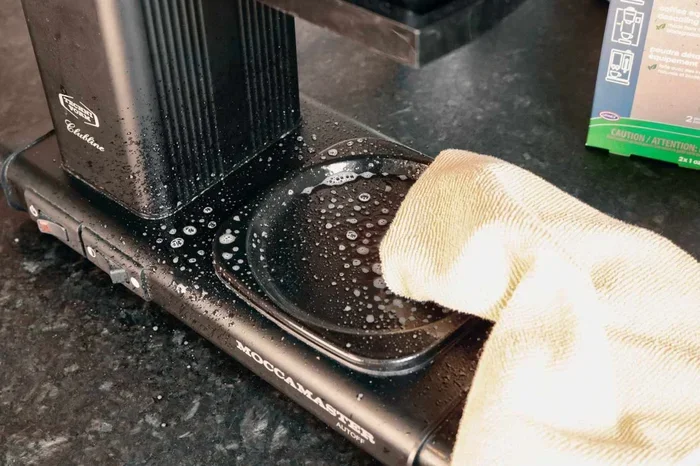
- Wipe down the machine weekly: A quick wipe of the exterior and the warming plate with a damp cloth keeps things fresh. It also prevents coffee oils from building up.
- Clean the filter basket after each use: Remove and rinse the filter basket with warm water. This prevents coffee oils from going rancid and keeps the water flow clear.
- Leave the lid open after brewing: This allows the inside of the machine to air dry. Moisture trapped inside can encourage mold growth and speed up mineral buildup.
Just like knowing how to clean oven with burnt food keeps your kitchen in good shape, regular coffee maker cleaning keeps your entire coffee routine running smoothly. These small habits add up over time.
Using Filtered Water
The single best way to reduce mineral buildup is to use filtered water. Tap water contains varying levels of minerals depending on where you live. In hard water areas, the difference is dramatic. A simple carbon filter pitcher or an in-machine water filter can make a big difference.
Filtered water does not eliminate the need to descale, but it extends the time between sessions significantly. Many coffee lovers find they only need to descale every four to six months when using filtered water instead of every one to three months with tap water.
Some Cuisinart drip coffee maker models come with a built-in water filter. If yours does, make sure you replace the filter according to the manufacturer’s schedule. A clogged or old filter does not do its job properly.
Think of it this way. Using filtered water is like wearing a raincoat in a storm. It does not stop all the water, but it keeps the worst of it off. Your machine stays cleaner longer, and your coffee tastes better every day.
When to Replace Your Coffee Maker Instead of Descaling
Descaling works wonders, but it is not a magic fix for everything. There comes a point when your machine has served its life and needs to be replaced. Here are signs that descaling will not solve the problem:
- Persistent bad taste: If you descale thoroughly and your coffee still tastes off, there may be permanent damage or contamination inside the machine.
- Leaking water: A machine that leaks from the bottom or sides may have cracked internal components. Descaling will not fix this.
- No heat: If the heating element fails, no amount of cleaning will restore it. The machine needs repair or replacement.
- Visible cracks or damage: Any cracks in the water reservoir or carafe are a hygiene risk. It is time to retire the machine.
- Age: Most drip coffee makers last about five to eight years with proper care. If yours is older and showing signs of wear, consider replacing it.
Just as you would not try to deep clean a Ninja Air Fryer oven when the heating element is burned out, do not keep trying to fix a coffee maker that needs replacing. Sometimes the smartest move is to invest in a new machine.
When you do replace your coffee maker, remember to descale the new one after the first few uses. New machines can have manufacturing residues left inside. A first-time descaling sets a great foundation for years of clean brewing.
Final Thoughts on Descaling Your Cuisinart Drip Coffee Maker
Descaling your Cuisinart drip coffee maker is one of the simplest and most impactful things you can do for your daily coffee routine. It takes just a few minutes of active work and about an hour of machine time. The result is better-tasting coffee, a more efficient machine, and a longer lifespan for your favorite brewer.
Make it a habit. Set a reminder on your phone for every six weeks. Keep white vinegar stocked in your pantry. And pay attention to the signs your machine gives you. A little prevention goes a very long way.
Your coffee deserves to taste its best every single morning. And your machine deserves the care that keeps it running strong. With the steps in this guide, you have everything you need to keep both happy. Happy brewing!
Frequently Asked Questions
Can I use lemon juice instead of vinegar to descale my Cuisinart coffee maker?
Yes, lemon juice works as a natural descaler. It contains citric acid, which dissolves mineral deposits. However, white vinegar is more commonly recommended because it is stronger and more effective on heavy buildup. If you use lemon juice, use the same equal-parts ratio with water and run the same cycles.
How do I reset the descale light on my Cuisinart drip coffee maker?
Most Cuisinart models let you reset the descale light by holding down the brew button for three to five seconds. Check your specific model’s manual for exact instructions. The reset process is quick and simple, and it lets you know when it is time for the next cleaning cycle.
Is it safe to descale my coffee maker with baking soda?
Baking soda is a mild cleaner and can help with light cleaning. However, it is not as effective as vinegar for breaking down mineral deposits. If you choose to use baking soda, mix two tablespoons with a full reservoir of water and run a brew cycle. Follow up with several rinse cycles to remove any residue.
Can I use the same vinegar solution to descale other kitchen appliances?
Yes, vinegar works well for descaling many kitchen appliances including kettles, espresso machines, and hot water dispensers. Just like how you would maintain different appliances in your kitchen, the vinegar method is a versatile and affordable cleaning solution for multiple devices. Always rinse thoroughly after using vinegar in any appliance.
What happens if I do not descale my coffee maker?
Without regular descaling, mineral buildup will gradually affect your coffee taste, slow down the brew cycle, and eventually damage the heating element. In severe cases, the machine may stop working entirely. Regular maintenance is much cheaper and easier than replacing a broken coffee maker.
How long does the descaling process take from start to finish?
The active work takes about ten minutes. However, the machine needs time to run the vinegar cycles and rinse cycles, which adds up to about one hour total. Most of that time is hands-off waiting while the machine does its work. You can do other things around the kitchen while it runs.