How To Cook A Cornish Game Hen In The Oven Perfectly
How To Cook A Cornish Game Hen In The Oven is an essential topic that provides valuable insights.
Key Takeaways
- Understanding How To Cook A Cornish Game Hen In The Oven: Provides essential knowledge
📑 Table of Contents
- What Is a Cornish Game Hen?
- How To Prep Your Cornish Game Hen
- Best Oven Temperature and Cooking Time
- Flavorful Seasoning and Stuffing Ideas
- How To Know When It Is Done
- Serving Suggestions and Side Dishes
- Common Mistakes to Avoid When Cooking Cornish Hen
- Quick Tips for Perfect Cornish Hen Every Time
- Expert Insights on Roasting Game Hens
- Key Takeaways
What Is a Cornish Game Hen?
A Cornish game hen is actually a young chicken, not a game bird at all. It is a cross between a Cornish chicken and a Plymouth Rock hen. These birds are bred to be small, usually weighing between one and two pounds each. Because of their size, they cook quickly and evenly, making them ideal for oven roasting.
Despite the name, you do not need to be a game hunter or a professional chef to cook one. Supermarkets carry them fresh or frozen in the poultry section. They are a popular choice for oven roasted game hen dinners because they look impressive and taste incredible. Each bird is usually big enough for one generous serving, which makes portion control easy.
Why Choose a Cornish Hen Over a Regular Chicken?
There are several reasons why home cooks love using a small whole chicken like the Cornish hen:
- Fast cooking time. A whole Cornish hen roasts in about 45 to 60 minutes, while a full chicken can take over an hour.
- Even cooking. The small size means the meat cooks through uniformly, reducing the risk of dry breast meat.
- Individual servings. Each bird makes a perfect single portion, which is great for dinner parties.
- Versatile flavor. The mild taste of Cornish hen pairs well with herbs, citrus, and rich stuffings.
- Elegant presentation. Roasted Cornish hens look stunning on the plate and are perfect for special occasions.
How To Prep Your Cornish Game Hen
Proper preparation is the first step toward a delicious roast. Taking a few extra minutes here makes a big difference in the final result.
Thawing Your Hen Safely
If you bought a frozen Cornish hen, you need to thaw it before cooking. The safest method is to place it in the refrigerator 24 hours before you plan to cook. You can also thaw it in cold water, changing the water every 30 minutes. Never thaw a bird on the counter at room temperature, as this creates a breeding ground for bacteria.
Patting Dry and Removing Giblets
Once thawed, remove the packaging and pull out any giblets or neck pieces from the cavity. Pat the entire bird dry with paper towels. This step is critical for getting crispy skin during roasting. Moisture on the surface creates steam, which prevents browning and crispiness.
Trussing the Bird
Trussing means tying the legs together with kitchen twine. This helps the bird cook evenly and keeps its shape during roasting. You can also tuck the wings under the body to prevent them from burning. Trussing is optional but highly recommended for a cleaner, more attractive roast.
Best Oven Temperature and Cooking Time
Getting the oven temperature for Cornish hen right is the most important factor in the entire process. Too high and the outside burns before the inside cooks. Too low and the bird dries out.
Recommended Temperature
Preheat your oven to 425 degrees Fahrenheit for the best results. This high heat creates a beautifully browned, crispy exterior while keeping the inside moist and tender. Some recipes call for 400 or 450 degrees, but 425 is the sweet spot for most ovens.
Cooking Time Guidelines
Cooking time depends on the size of the bird and whether it is stuffed. Here is a general guide for cooking time for Cornish hen:
- Unstuffed hen (1 to 1.5 lbs): 45 to 55 minutes
- Stuffed hen (1.5 to 2 lbs): 55 to 65 minutes
- Multiple hens on one pan: Add 5 to 10 minutes
Always use a meat thermometer to check the internal temperature. The thickest part of the thigh should read 165 degrees Fahrenheit. This is the safest and most reliable way to know your poultry cooking is complete.
Should You Cover the Hen With Foil?
Some cooks cover the hen with aluminum foil for the first half of cooking. This traps moisture and keeps the breast from drying out. However, covering the bird prevents the skin from crisping. For the best crispy skin, skip the foil and roast the hen uncovered for the entire cooking time. If your bird starts to brown too quickly, you can loosely tent it with foil for the last 10 minutes.
Flavorful Seasoning and Stuffing Ideas
The beauty of a Cornish hen recipe is how customizable it is. You can keep it simple with salt and pepper, or go bold with herbs and aromatics.
Classic Herb Butter Seasoning
One of the easiest and most flavorful ways to season a Cornish hen is with herb butter. Mix softened butter with minced garlic, chopped rosemary, thyme, and a pinch of salt. Gently loosen the skin over the breast and rub the butter directly onto the meat. Spread the remaining butter over the outside of the bird. This method adds incredible flavor and helps the skin turn golden and crispy.
Lemon and Garlic Roast
For a bright, fresh flavor, stuff the cavity with lemon halves and garlic cloves. Drizzle the outside with olive oil, salt, pepper, and dried oregano. The lemon juices steam inside the bird as it roasts, keeping the meat juicy while infusing it with a lovely citrus aroma.
Stuffed Cornish Hen Options
Stuffing adds flavor and makes the bird look elegant. Here are some popular ideas:
- Wild rice and mushroom stuffing: A rich, earthy filling that pairs perfectly with the mild flavor of the hen.
- Apple and sausage stuffing: A sweet and savory combination that works especially well in fall.
- Herb and bread stuffing: A classic choice with parsley, sage, and toasted bread cubes.
- Quinoa and vegetable stuffing: A lighter, healthier option packed with colorful vegetables.
Pack the stuffing loosely into the cavity. Do not pack it too tightly, or it will not cook evenly. A general rule is to use about one cup of stuffing per bird.
How To Know When It Is Done
Knowing the exact moment your oven roasted game hen is ready takes the guesswork out of cooking.
Using a Meat Thermometer
A digital meat thermometer is the single best tool for roasting poultry. Insert it into the thickest part of the thigh, making sure it does not touch the bone. When the temperature reads 165 degrees Fahrenheit, the bird is done. Let it rest for at least five minutes before cutting into it.
Visual and Tactile Cues
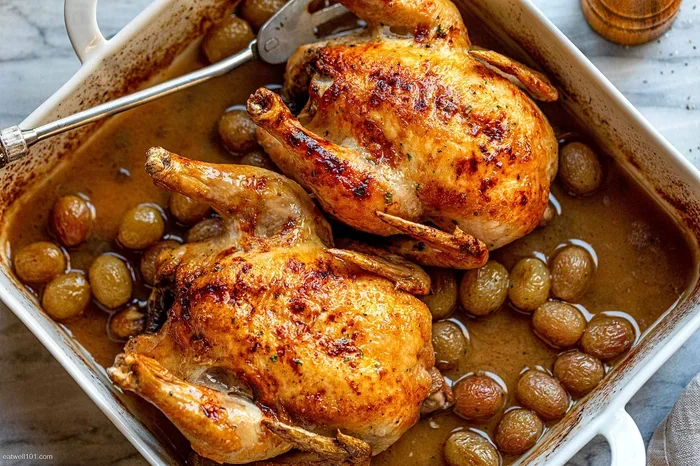
Even without a thermometer, you can tell when a Cornish hen is ready. The skin should be deep golden brown and crispy. When you wiggle the leg, it should move freely. Juices that run from the thickest part should be clear, not pink. If you see any pink, return the bird to the oven for a few more minutes.
Resting the Bird
Resting is one of the most overlooked steps in roasting. Let the hen sit on a cutting board for five to ten minutes after it comes out of the oven. This allows the juices to redistribute throughout the meat. If you cut too soon, the juices run out and the bird ends up dry. Resting makes a noticeable difference in tenderness.
Serving Suggestions and Side Dishes
A roasted Cornish hen is delicious on its own, but the right sides can turn it into a complete meal. Here are some ideas that pair beautifully with game bird cooking:
Best Side Dishes for Cornish Hen
- Roasted root vegetables: Carrots, parsnips, and potatoes roasted in the same oven absorb the hen’s drippings.
- Garlic mashed potatoes: Creamy and comforting, the perfect match for a rich roast.
- Wild rice pilaf: Nutty and flavorful, it complements the earthy taste of game birds.
- Fresh green salad: A light, acidic salad cuts through the richness of the roasted meat.
- Steamed asparagus or green beans: A simple, healthy side that balances the heaviness of the roast.
Making Gravy from the Pan Drippings
Do not throw away the pan drippings. They are full of flavor and make an excellent gravy. Pour off the fat, leaving the browned bits in the pan. Add a cup of chicken broth and whisk over medium heat. Sprinkle in a little flour or cornstarch to thicken. Season with salt and pepper. In just a few minutes, you have a homemade gravy that elevates the entire dish.
Common Mistakes to Avoid When Cooking Cornish Hen
Even experienced cooks can make mistakes with this delicate bird. Here are the most common ones to watch out for:
Overcooking the Bird
The biggest mistake is cooking the hen too long. Because it is small, it goes from perfectly done to dry very quickly. Always set a timer and check the temperature early. It is better to pull the bird out a few minutes early and let carryover cooking finish the job.
Skipping the Dry-Pat Step
Many people skip drying the skin before roasting. This results in pale, soft skin instead of the crispy golden finish you want. Take the extra two minutes to pat the bird thoroughly dry with paper towels.
Not Letting the Bird Come to Room Temperature
Letting the hen sit at room temperature for 20 to 30 minutes before cooking helps it roast more evenly. A cold bird going into a hot oven cooks unevenly, with the outside overcooking before the inside is done.
Overstuffing the Cavity
Stuffing looks pretty, but packing too much into the cavity blocks heat from circulating properly. Use no more than one cup of stuffing per bird and keep it loosely packed.
Quick Tips for Perfect Cornish Hen Every Time
Here are some fast, actionable tips to keep in mind:
- Brine the hen for extra juiciness. Soak it in salted water for two to four hours before roasting.
- Use a wire rack on the baking sheet. This allows hot air to circulate underneath, promoting even browning.
- Baste the bird halfway through cooking. Spoon the pan juices over the top to keep it moist and build flavor.
- Let the hen rest before cutting. Five to ten minutes makes the meat significantly more tender.
- Save the bones for stock. After carving, toss the carcass into a pot with water and vegetables for homemade chicken stock.
Expert Insights on Roasting Game Hens
Professional chefs agree that the key to a great Cornish hen is simplicity. The bird has a delicate flavor that does not need heavy seasoning. Fresh herbs, good quality butter, and proper temperature control are all you need. Many chefs also recommend butterflying the hen, which means removing the backbone and flattening it before roasting. This technique reduces cooking time by about 15 minutes and creates more surface area for crispy skin.
If you are cooking multiple hens for a dinner party, arrange them on the same baking sheet with space between each bird. Crowding the pan traps steam and prevents even roasting. Give each hen at least two inches of space on all sides.
Key Takeaways
- Perfect temperature: Roast at 425 degrees Fahrenheit for crispy skin and juicy meat.
- Cook time matters: Plan for 45 to 65 minutes depending on size and stuffing.
- Always use a meat thermometer: 165 degrees Fahrenheit in the thigh is the target.
- Dry the skin thoroughly: Patting the bird dry is the secret to crispy, golden skin.
- Rest before serving: Let the hen rest for five to ten minutes for maximum juiciness.
- Season simply but well: Herb butter, lemon, and garlic are classic flavor pairings that work beautifully.
- Avoid overcooking: Small birds cook fast, so check early and often.
Frequently Asked Questions
How long does it take to cook a Cornish game hen in the oven?
At 425 degrees Fahrenheit, an unstuffed Cornish hen takes about 45 to 55 minutes. A stuffed hen may need 55 to 65 minutes. Always check the internal temperature with a meat thermometer to be sure the thickest part of the thigh reaches 165 degrees Fahrenheit.
What temperature should a Cornish hen be when done?
The internal temperature should reach 165 degrees Fahrenheit in the thickest part of the thigh, away from the bone. This is the safe temperature for all poultry and ensures the meat is both safe to eat and juicy.
Should I cover a Cornish hen with foil while roasting?
Most experts recommend roasting the hen uncovered for crispy skin. If the bird is browning too quickly, you can loosely tent it with foil for the last 10 to 15 minutes of cooking. Skipping the foil for most of the roast gives the best texture and color.
Can I cook frozen Cornish hens in the oven?
It is not recommended to cook a frozen Cornish hen directly in the oven. Thaw it first in the refrigerator for 24 hours or in cold water. Cooking from frozen leads to uneven cooking and increases the risk of foodborne illness.
What is the best stuffing for a Cornish hen?
Classic options include wild rice and mushroom, apple and sausage, and herb bread stuffing. Keep the stuffing loose and use about one cup per bird. Stuffing should be packed gently to allow heat to circulate and cook it evenly inside the cavity.
How do I get crispy skin on my Cornish hen?
The key is to pat the bird completely dry before seasoning and roasting. Rub the skin with a thin layer of oil or butter, and roast uncovered at 425 degrees Fahrenheit. Avoid covering the bird with foil for the entire cook, as this traps steam and prevents crispiness.
=== CONCLUSION ===
Cooking a Cornish game hen in the oven is one of the most rewarding things you can do in the kitchen. It is fast, elegant, and bursting with flavor. With the right temperature, a little seasoning, and a meat thermometer, you can serve a restaurant-quality roast without any stress. Follow the tips in this guide, avoid the common mistakes, and you will have a showstopping dish that impresses everyone at the table.
Start with a simple herb butter recipe and work your way up to stuffed variations as you gain confidence. The more you cook Cornish hens, the more intuitive the process becomes. Soon, it will be your go-to recipe for dinner parties, holidays, or any night you want something special. Grab a bird from your local market, preheat the oven, and enjoy the process of creating something truly delicious.