How To Clean Mr Coffee Maker 12 Cup And Keep It Fresh
Cleaning your Mr Coffee Maker 12 Cup regularly keeps your coffee tasting great and your machine running smoothly. This guide covers everything from daily rinsing to deep descaling using simple household ingredients like vinegar and water. You will learn how to clean every part of the machine, avoid common mistakes, and maintain freshness between cleanings.
Key Takeaways
- Regular cleaning removes coffee oil buildup and mineral deposits that affect taste.
- Vinegar and water make the best natural descaling solution for your Mr Coffee 12 Cup.
- Cleaning the carafe, filter basket, and water reservoir should happen weekly.
- Deep descaling every one to three months prevents limescale from damaging internal parts.
- Simple daily habits like rinsing after each brew keep your coffee maker fresh longer.
- Avoid harsh chemicals and abrasive scrubbers that can damage your machine.
- A clean coffee maker brews faster, tastes better, and lasts many years.
📑 Table of Contents
Why Cleaning Your Mr Coffee Maker 12 Cup Matters
Your coffee maker works hard every morning. Over time, coffee oil buildup and mineral deposits collect inside the machine. These residues change the flavor of your coffee. They can also slow down the brewing process.
Cleaning your Mr Coffee 12 Cup machine is not just about taste. It is also about health and machine longevity. Old coffee oils can go rancid. Mineral scale can clog internal components. Regular cleaning prevents both problems.
The Impact of Coffee Oil Buildup
Every time you brew coffee, oils from the grounds stay behind. These oils coat the inside of your machine. They build up over days and weeks. This creates a stale, bitter flavor in your fresh cup.
Coffee oils can also turn rancid. This gives your coffee a sour or off taste. You might not notice it at first. But once you clean the machine, the difference is amazing. Your coffee will taste brighter and cleaner.
Health Benefits of a Clean Coffee Maker
A dirty coffee maker can grow mold and bacteria. This is especially true in the water reservoir. Mold thrives in warm, moist environments. Drinking from a contaminated machine is not good for your health.
Regular cleaning kills bacteria and removes mold spores. It also prevents the growth of yeast and other microorganisms. A clean machine means safer, healthier coffee every day.
What You Will Need to Clean Your Mr Coffee Maker
Good news! You do not need expensive cleaners. Most of what you need is already in your kitchen. Here is a simple list of supplies.
Household Cleaning Supplies
- White vinegar – This is your best friend for descaling. It dissolves mineral deposits naturally.
- Baking soda – Great for scrubbing away stubborn stains in the carafe.
- Warm water – Used for rinsing and soaking parts.
- Mild dish soap – Use a small amount for hand washing removable parts.
Tools for Deep Cleaning
- Soft sponge or cloth – For wiping down surfaces without scratching.
- Soft-bristled brush – Helps clean hard-to-reach spots in the filter basket.
- Dry towel – For drying parts after washing.
- Cotton swabs – Great for cleaning small openings and vents.
Some people also use lemon juice as a natural alternative to vinegar. It works well for light descaling. However, vinegar is more effective for heavy mineral buildup.
Step-by-Step Cleaning Process
Now let us get into the actual cleaning. Follow these steps carefully for the best results. This process works for all Mr Coffee 12 Cup models.
Step 1: Unplug and Disassemble the Machine
Always start by unplugging your coffee maker. Safety comes first. Remove the carafe, filter basket, and any other removable parts. Set them aside on a clean towel.
Leave the machine open and let it cool down completely. Do not attempt to clean any hot parts. Wait at least 15 minutes before touching internal components.
Step 2: Clean the Water Reservoir
The water reservoir is where mineral deposits build up the most. Fill it with equal parts white vinegar and warm water. For a Mr Coffee 12 Cup machine, use about 4 cups of each.
Let the solution sit for 30 minutes. This gives the vinegar time to dissolve the scale. After 30 minutes, run a full brew cycle without coffee grounds. This flushes the vinegar through the internal tubing.
Once the cycle finishes, discard the vinegar solution. Rinse the reservoir thoroughly with clean water. Run two more cycles with plain water to remove any vinegar taste.
If your machine has heavy buildup, you can repeat this process. Some users find that cleaning appliances with vinegar follows the same principle. The acid breaks down deposits effectively.
Step 3: Descale the Machine
Descaling removes hard mineral deposits from inside the machine. These deposits are mostly calcium and lime. They form from repeated use of tap water.
For a thorough descale, use the vinegar method described above. Let the vinegar solution sit in the reservoir for one hour if buildup is heavy. Then run a full brew cycle. Follow up with two to three rinse cycles.
You can also use a commercial descaling solution. These are available at most grocery stores. They work well but are not necessary. Vinegar does the job just as effectively at a fraction of the cost.
Descaling should be done every one to three months. The frequency depends on how often you use the machine and how hard your water is.
Step 4: Clean the Carafe and Filter Basket
Remove the carafe and filter basket. Wash them with warm water and mild dish soap. Use a soft sponge to avoid scratching the glass or plastic surfaces.
For stubborn stains inside the carafe, make a paste with baking soda and water. Apply it to the stained areas and let it sit for 10 minutes. Scrub gently with a soft sponge. Rinse thoroughly.
The filter basket often has coffee oil residue stuck to it. Use a soft brush to clean the small holes. Rinse under warm running water until all soap is gone.
If you need to remove tough stains from other kitchen items, the method of soaking parts in a cleaning solution works similarly. Letting things soak loosens buildup before you scrub.
Step 5: Wipe Down the Exterior
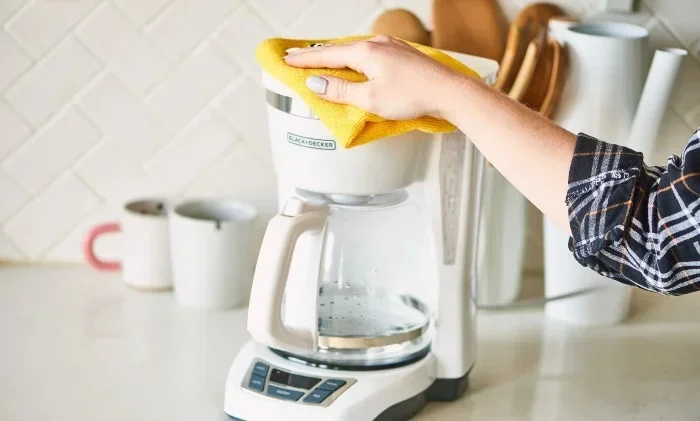
Do not forget the outside of the machine. Use a damp cloth with a small amount of dish soap. Wipe down the housing, the warming plate, and the control panel.
For the warming plate, sprinkle a little baking soda on it first. This helps lift burnt-on coffee spills. Wipe with a damp cloth afterward. Dry everything with a clean towel.
Step 6: Run a Final Rinse Cycle
After reassembling the machine, run one more rinse cycle. Use plain fresh water. This ensures no cleaning residue remains inside the machine.
Brew and discard one full pot of water. Your Mr Coffee 12 Cup machine is now clean and ready to use. The coffee you brew next will taste noticeably better.
How to Keep Your Coffee Maker Fresh Between Cleanings
A deep clean is important. But daily and weekly habits matter just as much. These simple practices keep your coffee maker fresh without much effort.
Daily Habits for Fresh Coffee
- Rinse the carafe after every use. Empty leftover coffee right after drinking. Do not let it sit in the carafe overnight.
- Remove the filter basket after brewing. Let it air dry with the lid open. This prevents moisture and oil buildup.
- Leave the lid off the machine. This allows the inside to dry out between uses. Moisture encourages mold growth.
- Wipe the warming plate after each use. Coffee spills burn onto the plate quickly. A quick wipe prevents hard-to-clean stains.
Weekly Maintenance Tips
- Wash the carafe and filter basket with warm soapy water. Do this every week even if they look clean.
- Flush the water reservoir with plain water. Run one brew cycle with just water. This rinses away early-stage deposits.
- Check the water filter if your model has one. Replace it every 60 brews or as recommended by the manufacturer.
- Inspect the machine for any visible mold or residue. Catch problems early before they become serious.
Think of it like maintaining any kitchen appliance. Regular care prevents buildup and extends the life of the machine. A little effort each week saves you from a big cleaning job later.
Common Mistakes to Avoid When Cleaning
Even with the best intentions, people make mistakes when cleaning coffee makers. Here are the most common ones to watch out for.
- Using harsh chemicals or bleach. These can damage internal components. They also leave behind chemical residues that end up in your coffee. Stick to vinegar, baking soda, and mild soap.
- Putting the coffee maker in the dishwasher. Most Mr Coffee machines are not dishwasher safe. The heat and harsh detergents can warp plastic and damage electronics.
- Skipping the rinse cycles after descaling. Vinegar taste in your coffee is unpleasant. Always run at least two full rinse cycles after using vinegar.
- Using abrasive scrubbers on the carafe. Steel wool or rough pads scratch glass. Scratches create spots where bacteria and stains accumulate. Use a soft sponge only.
- Ignoring the water filter. A clogged filter affects water flow and coffee taste. Replace it regularly as recommended.
Avoiding these mistakes keeps your machine in great shape. It also ensures your coffee tastes clean and fresh every single time.
Expert Tips for Long-Lasting Freshness
Here are some bonus tips from coffee experts and experienced home baristas. These small changes make a big difference over time.
- Use filtered water in your machine. This reduces mineral buildup significantly. It also improves the taste of your coffee.
- Do not leave water sitting in the reservoir. Empty leftover water after each use. Stagnant water promotes bacterial growth.
- Deep clean before storing the machine. If you will not use the coffee maker for a while, give it a thorough cleaning first. This prevents mold and odors during storage.
- Keep spare parts on hand. Filters, carafe lids, and seals wear out over time. Replacing them keeps the machine running at its best.
Following these tips means your Mr Coffee 12 Cup will serve you well for years. Clean machines brew better coffee. It is that simple.
Conclusion
Cleaning your Mr Coffee Maker 12 Cup does not have to be a chore. With the right supplies and a simple routine, you can keep your machine in top shape. Regular cleaning removes coffee oil buildup, mineral deposits, and bacteria. Your coffee will taste fresher and your machine will last longer.
Remember the key steps. Descale every one to three months. Clean the carafe and filter basket weekly. Rinse after every brew. Follow daily habits that prevent buildup. Avoid common mistakes like using harsh chemicals or skipping rinse cycles.
A clean coffee maker is a happy coffee maker. Take a few minutes each week to care for your machine. The payoff is better-tasting coffee every single morning. Start your cleaning routine today and enjoy the difference it makes.
Frequently Asked Questions
How often should I clean my Mr Coffee Maker 12 Cup?
You should do a quick rinse after every use and wash removable parts weekly. A full deep clean and descale should happen every one to three months. The more you use the machine, the more often you need to clean it.
Can I use vinegar to clean my coffee maker?
Yes! White vinegar is one of the best natural cleaners for coffee makers. It dissolves mineral deposits and removes coffee oil buildup. Just make sure to run extra rinse cycles afterward to remove any vinegar taste.
What is the best way to remove mineral deposits from a coffee maker?
A vinegar and water solution works best for removing mineral deposits. Fill the reservoir with equal parts vinegar and water, run a brew cycle, then rinse thoroughly with plain water two to three times. This breaks down limescale effectively without harsh chemicals.
Can I put my Mr Coffee carafe in the dishwasher?
Most Mr Coffee carafes are dishwasher safe, but hand washing is gentler and extends the life of the glass. If you do use a dishwasher, place the carafe on the top rack. Avoid harsh detergents that can cause spotting or clouding over time.
Why does my coffee taste funny even after cleaning?
If your coffee still tastes off after cleaning, you may need to run extra rinse cycles. Residual vinegar or cleaning solution can linger inside the machine. Also check the water filter and make sure all parts are completely dry before reassembling.
Is it safe to use lemon juice instead of vinegar for descaling?
Yes, lemon juice is a safe and natural alternative to vinegar for descaling. It contains citric acid which dissolves mineral deposits. However, vinegar is typically stronger and more effective for heavy buildup. Use lemon juice for light maintenance cleaning and vinegar for deeper descaling jobs.