Why Is My Electric Oven Not Getting Up To Temperature
Why is my electric oven not getting up to temperature? The most common causes include a faulty bake element, a broken temperature sensor, a malfunctioning thermostat, or a blown thermal fuse. This guide walks you through each possible cause with clear, step-by-step troubleshooting tips so you can get your oven back to the right heat fast.
Key Takeaways
- Bad Bake Element: A damaged or burnt-out bake element is the number one reason your oven won’t heat properly.
- Faulty Temperature Sensor: A broken sensor sends wrong readings, so your oven never reaches the set temperature.
- Blown Thermal Fuse: A tripped thermal fuse cuts power to the heating system entirely.
- Oven Calibration Issues: Your oven may be working fine but just needs recalibrating.
- Control Board Failure: A bad control board can prevent the oven from sending power to the heating elements.
- DIY Fixes Save Money: Many of these problems are easy to diagnose and fix at home without calling a pro.
📑 Table of Contents
- Why Is My Electric Oven Not Getting Up To Temperature
- Common Reasons Your Oven Won’t Reach the Right Heat
- How to Test If Your Oven Is Actually Underheating
- Oven Calibration: Is Your Oven Off by a Few Degrees?
- When to Call a Professional for Oven Repair
- Comparison Table: Common Oven Heating Problems and Fixes
- Preventing Future Heating Problems
- Expert Insights on Electric Oven Heating Issues
- Common Mistakes People Make When Troubleshooting Oven Heating
- Key Takeaways
- Conclusion
Why Is My Electric Oven Not Getting Up To Temperature
You preheat your oven, set the dial, and wait. But when the timer beeps, your food still won’t cook right. Why is my electric oven not getting up to temperature? It is a frustrating problem, but the good news is that it is usually fixable. In most cases, the issue comes down to one of a few common parts that wear out over time.
This guide breaks down every likely reason your oven is failing to heat up. You will learn how to spot the signs, test the parts yourself, and decide when to call in a repair pro. Whether you are a beginner in the kitchen or a seasoned home cook, this guide will help you get your oven back in working order.
Let us start with the most obvious culprit and work our way through the less common causes. By the end, you will know exactly what to check and how to fix it.
Quick Tips Before You Start Troubleshooting
- Always unplug your oven before inspecting any internal parts.
- Let the oven cool completely before touching any components.
- Keep your oven manual handy. It has model-specific details.
- Take photos of any parts you remove so reassembly is easy.
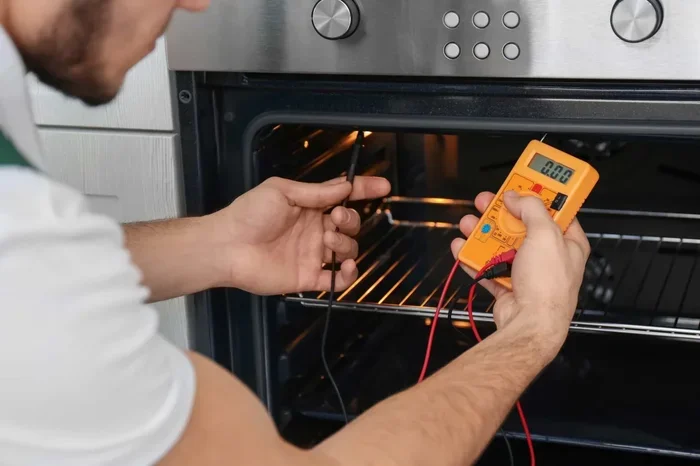
- Use a multimeter to test electrical parts safely.
Common Reasons Your Oven Won’t Reach the Right Heat
Several things can cause an electric oven to fall short on temperature. Some are simple fixes you can do in minutes. Others require a bit more effort or a replacement part. Let us look at each one closely.
The Bake Element Is Burned Out
The bake element is the heating coil at the bottom of your oven. It is responsible for most of the heat during baking. When it goes bad, your oven simply cannot get hot enough. This is the most common reason why is my electric oven not getting up to temperature.
Here is how to check it. First, look at the element through the oven window. Do you see any visible damage? Blisters, holes, or dark spots mean the element is burnt out. Next, turn the oven on and watch the element. If only the top broil element glows red and the bottom one stays dark, the bake element is dead.
You can also test it with a multimeter. Remove the element and set your multimeter to the lowest ohm setting. Touch the probes to the element terminals. You should get a reading between 20 and 40 ohms. If you get no reading or an infinite reading, the element needs to be replaced.
Replacing a bake element is straightforward. Most models just require two screws and a couple of wires. New elements cost between $20 and $60, and you can find the right one using your oven model number.
The Broil Element Is Failing
While the bake element handles most baking tasks, the broil element at the top helps with preheating and broiling. If the broil element is weak or broken, your oven may struggle to reach high temperatures. This is especially true when you are broiling or using the convection setting.
Check the broil element the same way you checked the bake element. Look for damage and test it with a multimeter. A weak element may glow dimly or only in spots. This is a clear sign it needs replacing.
The Temperature Sensor Is Faulty
The temperature sensor is a small metal rod inside the oven cavity. It tells the oven how hot it is. If this sensor is broken or dirty, it sends wrong information to the control board. The oven then thinks it is already hot enough and stops heating too early.
To test the sensor, locate it inside the oven, usually at the back wall. Remove it and check for visible damage. Use a multimeter to measure its resistance. At room temperature, it should read around 1,000 to 1,100 ohms. If the reading is way off, replace the sensor.
Sometimes the sensor just needs a good cleaning. Grease and food buildup on the tip can throw off its readings. Wipe it gently with a damp cloth and see if that fixes the problem.
The Oven Thermostat Is Malfunctioning
The thermostat controls the oven’s temperature. It tells the heating elements when to turn on and off. A broken thermostat can cause the oven to underheat or overheat. In older ovens, the thermostat is mechanical. In newer models, it is electronic and tied to the control board.
Testing a thermostat is tricky. You can use an oven thermometer to compare the actual temperature with what the display says. If the difference is more than 25 degrees, the thermostat may need recalibrating or replacing. Some ovens have a calibration adjustment built into the settings. Check your manual for instructions.
The Thermal Fuse Has Blown
A thermal fuse is a safety device that protects your oven from overheating. If the oven gets too hot, the fuse blows and cuts power to the heating elements. Once blown, a thermal fuse cannot be reset. You must replace it.
A blown thermal fuse usually means the oven will not heat at all, not just that it falls short on temperature. To check it, locate the fuse (usually near the back of the oven or on the control board). Test it with a multimeter for continuity. No continuity means the fuse is blown and needs replacing.
Keep in mind that a blown fuse can be a symptom of a deeper problem. If the fuse keeps blowing, you may have a wiring issue or a failing element drawing too much current. In that case, it is best to call a professional.
The Oven Control Board Is Defective
The control board is the brain of your oven. It controls everything from heating cycles to temperature settings. If the control board fails, it may not send power to the heating elements properly. This can cause your oven to not get up to temperature.
Control board failure is less common than the other issues on this list. But it does happen, especially in ovens that are 10 years old or more. Signs of a bad control board include erratic behavior, error codes on the display, or the oven not responding to any input at all.
Replacing a control board is more complex than swapping out a heating element. It involves disconnecting wiring harnesses and dealing with electronic components. If you are not comfortable with this, it is best to hire a technician.
How to Test If Your Oven Is Actually Underheating
Before you start replacing parts, make sure your oven really is underheating. Sometimes the problem is not the oven at all. Here is a simple test you can do.
Get an oven thermometer and place it on the middle rack. Set your oven to 350 degrees Fahrenheit and let it preheat fully. Wait at least 20 minutes after the preheat signal, then check the thermometer.
If the thermometer reads 325 degrees or lower, your oven is not reaching the right temperature. If it reads 350 degrees or higher, your oven is working fine and the problem may be with your cooking times or recipe adjustments.
Repeat this test at different temperatures like 250 degrees and 450 degrees. This helps you see if the problem is consistent or only happens at certain temperatures.
Oven Calibration: Is Your Oven Off by a Few Degrees?
Even a healthy oven can be slightly off on temperature. Most ovens have a tolerance of plus or minus 5 to 10 degrees. But if yours is off by 25 degrees or more, you may need to recalibrate.
Some ovens have a calibration screw or adjustment in the temperature settings. Others require a technician to adjust the sensor calibration. Check your owner’s manual for specific instructions for your model.
Recalibrating your oven is a quick fix that can make a big difference in how your food cooks. It is especially helpful if you have recently noticed uneven browning or longer cook times.
When to Call a Professional for Oven Repair
Not every oven problem is a DIY fix. Some issues require a trained technician. Here are signs you should call in the pros:
- The oven trips the circuit breaker when turned on.
- You smell burning plastic or see sparks inside the oven.
- The control board shows error codes you cannot clear.
- Multiple parts have failed at the same time.
- You are not comfortable working with electrical components.
Safety always comes first. If you are unsure about any step, it is better to get help than to risk injury or further damage to your appliance.
Comparison Table: Common Oven Heating Problems and Fixes
| Problem | Likely Cause | Fix Difficulty | Cost to Fix |
|---|---|---|---|
| Oven not heating at all | Blown thermal fuse or dead bake element | Easy to Medium | $20 to $80 |
| Oven underheating | Faulty temperature sensor or weak element | Easy | $20 to $60 |
| Oven overheating | Bad thermostat or sensor | Medium | $50 to $150 |
| Oven heats unevenly | Dirty sensor or failing element | Easy | $20 to $50 |
| Oven not responding to settings | Control board failure | Hard | $100 to $300 |
Preventing Future Heating Problems
Once you fix your oven, you want to keep it running smoothly. Here are some simple habits that help prevent heating issues in the future:
- Clean the oven interior regularly. Grease buildup can affect sensors and elements.
- Do not overload the oven. Proper air circulation helps it heat evenly.
- Replace worn door seals. A bad seal lets heat escape and throws off temperature.
- Use oven-safe cookware. Non-oven-safe pans can release fumes that damage internal parts.
- Schedule a professional inspection every year or two for older ovens.
Expert Insights on Electric Oven Heating Issues
Many homeowners assume a cold oven means a costly replacement. In reality, most heating problems come down to one of three parts: the bake element, the temperature sensor, or the thermal fuse. A quick diagnosis can save you hundreds of dollars in unnecessary appliance purchases.
Appliance repair technicians often say that the bake element is the first thing they check. It takes the most abuse and has the shortest lifespan of any heating component. If your oven is more than 10 years old, it may be worth replacing the element proactively before it fails completely.
Another common insight is to never ignore error codes. Modern ovens are designed to communicate problems through the display panel. A quick Google search of your model number and the error code can often point you right to the cause.
Common Mistakes People Make When Troubleshooting Oven Heating
- Skipping the oven thermometer test. Many people assume the oven is broken when it is actually just a few degrees off.
- Not checking the power supply. A tripped breaker or loose outlet can mimic a broken oven.
- Replacing parts without testing them first. This wastes money and can lead to the same problem if the wrong part was the cause.
- Ignoring error codes. Those codes are your oven’s way of telling you exactly what is wrong.
- Using the oven with a damaged element. A partially broken element can get worse and damage other components.
Key Takeaways
- Faulty Bake Element: The most common reason why is my electric oven not getting up to temperature is a dead or weak bake element at the bottom of the oven.
- Bad Temperature Sensor: A dirty or broken sensor sends wrong readings, causing the oven to shut off heating too early.
- Blown Thermal Fuse: This safety device cuts power entirely when it blows and must be replaced.
- Calibration Drift: Older ovens can lose calibration over time and may just need readjusting.
- Control Board Issues: A failing control board disrupts the entire heating cycle and usually needs professional replacement.
- Simple Tests First: Always use an oven thermometer and a multimeter before replacing expensive parts.
- Prevention Matters: Regular cleaning and maintenance can extend your oven’s heating performance for years.
Conclusion
Why is my electric oven not getting up to temperature? The answer is usually one of a handful of common issues. A burnt-out bake element, a faulty temperature sensor, a blown thermal fuse, or a miscalibrated thermostat are all likely culprits. The good news is that most of these problems are easy to diagnose and affordable to fix.
Start with the simplest checks. Look at the heating elements for visible damage. Test the temperature sensor with a multimeter. Use an oven thermometer to confirm the problem. These steps can save you time and money before you ever pick up the phone to call a repair service.
If the problem persists or you are not comfortable working with electrical components, do not hesitate to call a professional. A qualified appliance technician can diagnose the issue quickly and get your oven back to the right temperature in no time.
Take care of your oven and it will take care of your cooking. A little attention goes a long way in keeping your kitchen running smoothly and your meals cooking perfectly every time.
FAQs
Can a dirty oven sensor cause heating problems?
Yes, absolutely. Grease and food residue on the temperature sensor can throw off its readings. The oven may think it is hotter than it actually is and shut off the heat too early. A simple cleaning with a damp cloth can often fix this issue.
How much does it cost to replace a bake element?
A replacement bake element typically costs between $20 and $60. If you hire a technician, add labor costs which usually range from $50 to $100. Doing it yourself is a great way to save money and it only takes about 30 minutes.
How long should an electric oven last?
Most electric ovens last between 13 and 15 years with proper care. Regular cleaning, gentle use of the controls, and timely repairs can help extend that lifespan. After 10 years, start keeping an eye on heating performance more closely.
Is it safe to use an oven that is not heating properly?
Not really. An oven that does not reach the right temperature can leave food undercooked, which poses a food safety risk. It can also lead to longer cook times and higher energy bills. It is best to fix the issue as soon as you notice it.
Will a power outage damage my oven’s heating elements?
Usually no. Power outages do not typically damage heating elements or sensors. However, a power surge during an outage could affect the control board or other electronic parts. Using a surge protector can help prevent this.
How do I know if my oven needs calibration?
The best way is to use an oven thermometer. Set your oven to 350 degrees and check the thermometer after it preheats. If the reading is off by more than 25 degrees, your oven likely needs recalibrating. Many newer ovens have a calibration mode in the settings menu.