Who Invented The French Press Coffee Maker Revealed
The French press coffee maker has a rich and surprising history that spans over a century. Multiple inventors across Europe claimed credit, making the origin story quite debated. The modern French press design we love today evolved from early patents in France and Italy. Understanding who invented the French press coffee maker helps you appreciate this simple yet brilliant brewing tool. Whether you are a casual coffee drinker or a true enthusiast, knowing its history adds depth to every cup.
The French press coffee maker is one of the most popular brewing tools in kitchens around the world. It is simple, affordable, and delivers rich, full-bodied coffee every time. But have you ever wondered who invented the French press coffee maker? The answer might surprise you. The history involves a French origin, an Italian redesign, and decades of evolution. In this article, we will explore the full story behind this beloved coffee device. You will learn about the inventors, the design changes, and why the French press remains so popular today.
Many coffee lovers reach for a French press every morning without thinking about its history. The device has been around for over a century. Yet its invention story is full of mystery, debate, and creative innovation. From early French patents to Italian redesigns, the French press has come a long way. It has survived trends and fads because it simply makes great coffee. Let us dive into the fascinating origin story of this classic brewing method.
## The Origin Story Of The French Press
### A French Beginning
The story of the French press starts in France. The very first version of this brewing device appeared in the mid-1800s. A Frenchman named Mayer and Delforge is often credited with the earliest known design. Around 1852, they filed a patent for a device that looked quite different from what we use today. Their design was a simple metal or cheesecloth filter that sat inside a container. You would pour hot water and coffee grounds into it and let the mixture steep.
This early version was not exactly the modern French press. It was more of a basic steeping device. But the core idea was the same. You immerse coffee grounds in hot water and let the flavors extract over time. This method is now called immersion brewing, and it remains the foundation of French press coffee making today.
### Early Design Challenges
The early French press designs had some real problems. The filters were not very effective. Coffee grounds often slipped through and ended up in your cup. The taste was often gritty and unpleasant. Over the years, inventors worked hard to solve these issues. They experimented with different filter materials and pressing mechanisms. Each improvement brought the design closer to what we recognize as a French press today.
By the late 1800s, several French households had their own versions of a press pot. The design was simple enough that many people built their own at home. This DIY culture helped spread the concept across Europe. People in neighboring countries started making their own versions too. The idea of a simple, effective coffee brewer was catching on fast.
## The Patent Battle: Who Really Invented It?
### The Italian Connection
Here is where the story gets really interesting. While France claims the earliest roots, Italy also has a strong claim. An Italian designer named Attilio Calimani filed a patent in 1929. His design was much closer to the modern French press we use today. Calimani introduced a spring-loaded plunger and a metal filter. This was a huge improvement over earlier designs. The spring mechanism pushed the filter down evenly, trapping most of the grounds.
Calimani’s patent is often cited as the birth of the modern French press. His design solved many of the problems that earlier versions had. The metal mesh filter was far more effective than cheesecloth. And the spring-loaded mechanism made pressing much easier and more consistent. Many coffee historians consider Calimani the true father of the modern French press.
### The Swiss Contribution
The story does not end with Italy. A Swiss company called Bodum also played a major role. In the 1950s, Bodum began producing French presses on a large scale. They refined the design further and made it more user-friendly. Bodum is now one of the most recognized French press brands in the world. Their version helped popularize the French press globally. The company’s commitment to quality and design set a new standard.
Bodum’s success proved that there was a huge market for this brewing method. Before Bodum, the French press was mostly popular in Europe. After Bodum brought it to the mainstream, it spread to North America and beyond. Today, you can find a French press in kitchens, offices, and hotels around the world.
### Comparing The Key Inventors
Let us look at how the main contributors compare. Each one brought something unique to the table.
| Inventor | Country | Year | Key Contribution |
|—|—|—|—|
| Mayer and Delforge | France | 1852 | First known patent for a coffee press |
| Attilio Calimani | Italy | 1929 | Spring-loaded plunger and metal filter |
| Bodum | Switzerland | 1950s | Mass production and global popularization |
Each inventor built on the work of the one before them. The French press is a great example of how innovation evolves over time. No single person can claim sole credit. Instead, it was a collaborative effort across countries and decades.
## How The French Press Works
### The Basics Of Immersion Brewing
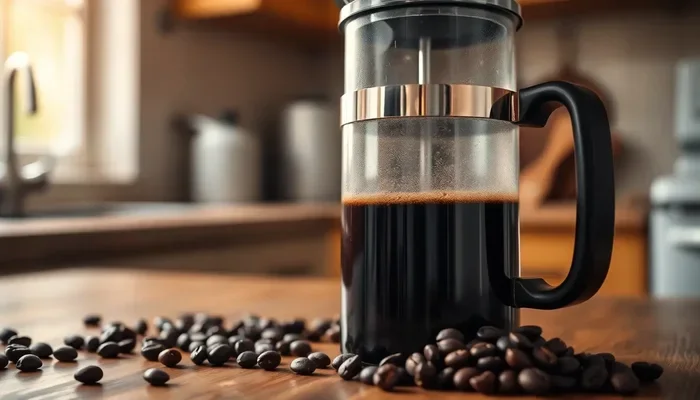
The French press uses a simple but effective method called immersion brewing. You add coarsely ground coffee to the bottom of the press. Then you pour hot water over the grounds. The coffee steeps for several minutes. During this time, the water extracts flavors, oils, and aromas from the grounds. Unlike drip coffee makers, the French press keeps the grounds in contact with the water the entire time.
This full contact is what gives French press coffee its rich, bold flavor. The oils and fine particles that paper filters trap in other methods stay in the cup. This creates a fuller body and a more complex taste profile. Many coffee lovers prefer this richness over the cleaner taste of filtered coffee.
### The Role Of Grind Size
Grind size matters a lot when using a French press. You need a coarse grind for the best results. If the grind is too fine, it will slip through the mesh filter. This creates a gritty, unpleasant cup of coffee. A coarse grind, similar to sea salt, works perfectly. It allows for proper extraction while keeping the sediment out of your drink.
Using a good coffee grinder at home makes a big difference. Pre-ground coffee from the store is often too fine for French press brewing. Investing in a quality burr grinder can elevate your coffee game significantly. Freshly ground beans also release more aroma and flavor.
### Brewing Time And Temperature
The ideal brewing time for French press coffee is about four minutes. You pour hot water that is around 200 degrees Fahrenheit. Let the coffee steep for four minutes. Then you press the plunger down slowly and steadily. Pour the coffee immediately after pressing. If you leave it sitting in the press, it will continue to extract and become bitter.
The water temperature is also important. Water that is too hot will over-extract the coffee. This leads to a harsh, bitter taste. Water that is too cool will under-extract. The result is weak and sour coffee. Finding the right balance makes all the difference in the world.
## Popular Brands And Modern Designs
### Classic French Press Designs
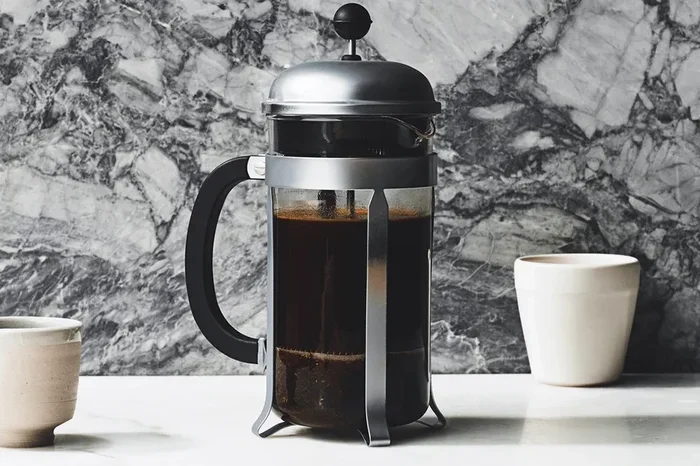
Today, there are many brands offering French presses. Bodum remains the most well-known name. Their Chambord model is a classic design that has been around for decades. It features a glass carafe with a stainless steel plunger and filter. The sleek look and reliable performance have made it a favorite for millions of users.
Other popular brands include Frieling, Espro, and SterlingPro. Each brand offers slight variations on the classic design. Some use double-wall insulation to keep coffee hot longer. Others use stainless steel carafes instead of glass. The variety means there is a French press for every preference and budget.
### Material Choices
French presses come in several material options. Glass carafes are the most traditional. They let you watch the coffee as it brews. Glass is also easy to clean and does not retain flavors. However, glass is fragile and can break if dropped.
Stainless steel French presses are more durable. They are great for travel and outdoor use. Many stainless steel models also feature double-wall insulation. This keeps your coffee hot for hours. The trade-off is that you cannot see the coffee while it brews.
Plastic French presses are the most affordable option. They are lightweight and nearly unbreakable. However, plastic can retain flavors over time. It is also less durable than glass or stainless steel. For everyday home use, glass or stainless steel is usually the better choice.
### The French Press In Modern Coffee Culture
The French press has made a big comeback in recent years. Third-wave coffee shops often feature French presses on their menus. Coffee enthusiasts appreciate the control and simplicity it offers. Unlike espresso machines, a French press does not require expensive equipment or technical skill. You can make café-quality coffee at home with very little effort.
The rise of home brewing during recent years also boosted French press popularity. Many people discovered the joy of making coffee the old-fashioned way. The French press fits perfectly into a minimalist, intentional lifestyle. It is a reminder that great coffee does not need to be complicated.
## French Press Vs Other Brewing Methods
### French Press vs Drip Coffee
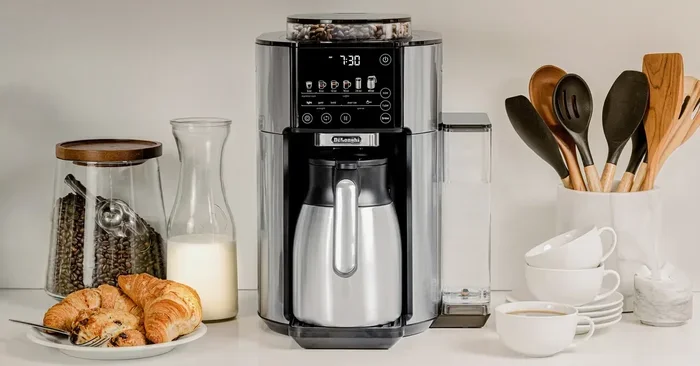
Drip coffee makers are the most common brewing method in American homes. They are convenient and easy to use. But they often produce a thinner, less flavorful cup compared to a French press. Drip machines use paper filters that trap oils and fine particles. This creates a cleaner cup but sacrifices some of the richness and body.
A French press gives you more control over the brewing process. You choose the grind size, water temperature, and steeping time. This level of control allows you to customize your coffee exactly to your taste. For many coffee lovers, this hands-on approach is part of the appeal.
### French Press vs Pour Over
Pour over coffee is another popular manual brewing method. It involves pouring water over coffee grounds in a filter cone. The water drips through the grounds and into a carafe below. Pour over coffee is clean and bright in flavor. It is also very precise and allows for excellent control.
The main difference between a French press and a pour over is the filter. Pour over uses a paper filter that removes most of the oils and sediment. French press uses a metal mesh filter that lets more of these elements through. The result is a fuller-bodied cup with more texture. Both methods produce excellent coffee, but they suit different taste preferences.
### French Press vs Espresso
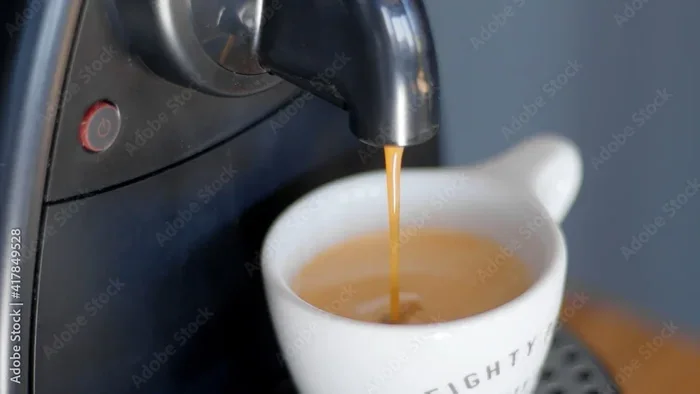
Espresso machines force hot water through finely ground coffee at high pressure. This produces a concentrated, intense shot of coffee. Espresso is the base for drinks like lattes, cappuccinos, and americanos. It has a thick crema on top and a very bold flavor.
A French press cannot replicate espresso. The pressure is far too low for true espresso extraction. However, you can use French press coffee as a base for milk drinks. Some people also use a French press to make cold brew concentrate. The versatility of the French press makes it a valuable tool in any coffee lover’s kitchen.
## How To Get The Most Out Of Your French Press
### Tips For Perfect French Press Coffee
Follow these simple tips to brew the best French press coffee every time.
- Use fresh, whole beans: Grind them just before brewing for maximum flavor.
- Choose a coarse grind: This prevents sediment and over-extraction.
- Heat water to 200 degrees Fahrenheit: Let boiling water cool for 30 seconds before pouring.
- Use the right ratio: About 1 to 2 tablespoons of coffee per 6 ounces of water.
- Steep for exactly four minutes: Use a timer for consistent results every time.
- Press slowly and steadily: This ensures even extraction and a cleaner cup.
- Pour immediately after pressing: Do not let the coffee sit in the press.
### Cleaning And Maintenance
Keeping your French press clean is essential for great-tasting coffee. Coffee oils build up over time and can turn rancid. This affects the flavor of every cup you brew. Clean your French press after every use. Disassemble the plunger and filter assembly. Wash all parts with warm soapy water. A bottle brush helps reach the inside of the carafe.
For a deep clean, try using a mixture of baking soda and water. Let it sit for 15 minutes before rinsing. This removes built-up oils and keeps your press fresh. Regular maintenance also extends the life of your French press significantly.
### Common Mistakes To Avoid
Many people make mistakes that ruin their French press coffee. One common error is using a grind that is too fine. This creates a muddy, gritty cup. Another mistake is using water that is too hot. Boiling water burns the coffee grounds and creates bitterness. Let your water cool slightly before pouring.
Some people leave the coffee sitting in the press after brewing. This causes over-extraction and a bitter taste. Always pour your coffee into a mug or carafe right away. Finally, using stale coffee beans is a sure way to get flat, lifeless coffee. Always use fresh beans for the best flavor.
## The French Press In Different Cultures
The French press is enjoyed in many countries around the world. In Europe, it is a staple in homes and cafés alike. The Italian term for French press is “caffettiera a stantuffo,” which means “plunger coffee maker.” In France, it is simply called a “cafetière.” In the United States, the name “French press” became popular in the mid-20th century.
Different cultures have adapted the French press to suit their preferences. In some countries, people add spices or sweeteners directly to the press. Others prefer to drink it black to fully appreciate the natural flavors. The versatility of the French press makes it adaptable to virtually any coffee tradition.
## The Future Of French Press Coffee
The French press continues to evolve with new innovations. Some modern designs feature insulated double walls for better heat retention. Others use advanced filter systems for a cleaner cup. There are even travel-sized French presses designed for camping and outdoor adventures. The core design remains the same, but small improvements keep making it better.
As coffee culture grows worldwide, the French press maintains its place as a beloved brewing method. Its simplicity, affordability, and excellent flavor ensure it will remain popular for decades to come. New coffee drinkers are constantly discovering the joy of French press coffee for the first time.
## Final Thoughts
The story of who invented the French press coffee maker is a story of collaboration across borders and generations. From a French patent in 1852 to an Italian redesign in 1929 to Swiss mass production in the 1950s, the French press evolved through the contributions of many creative minds. No single inventor can take full credit. Instead, it is a testament to the power of iterative innovation.
Today, the French press remains one of the best ways to brew coffee at home. It is simple, affordable, and produces a rich, full-flavored cup that is hard to beat. Whether you are a seasoned coffee pro or just starting your brewing journey, the French press deserves a place in your kitchen. Understanding its history makes every cup you brew even more meaningful.
The next time you press down that plunger and inhale the rich aroma of freshly brewed coffee, remember the long line of inventors and innovators who made it all possible. The French press is more than just a coffee maker. It is a piece of living history that continues to bring people together over great coffee every single day.
What is the French press coffee maker?
A French press coffee maker is a manual brewing device that uses immersion brewing to extract flavor from coffee grounds. You add coarsely ground coffee and hot water to the press, let it steep for about four minutes, and then press a plunger down to separate the grounds from the liquid. The result is a rich, full-bodied cup of coffee with natural oils and flavors intact.
Who is credited with inventing the French press?
Multiple people are credited with inventing or refining the French press. Mayer and Delforge from France filed the earliest known patent around 1852. Attilio Calimani from Italy filed a modern-style patent in 1929 that introduced the spring-loaded plunger. The Swiss company Bodum popularized the design globally in the 1950s. No single person holds sole credit for the invention.
Why is it called a French press?
It is called a French press because the earliest known version of the device was invented in France. The original patent was filed by French inventors in the 1850s. The name stuck even as the design was refined by Italian and Swiss manufacturers over the following decades. In France, it is also known as a “cafetière.”
How is a French press different from drip coffee?
A French press uses immersion brewing, where coffee grounds steep in hot water for several minutes. A drip coffee maker passes water through a paper filter filled with grounds. The French press retains more oils and fine particles, creating a richer, fuller-bodied cup. Drip coffee is generally cleaner and lighter in flavor because the paper filter removes more sediment.
Can I use any coffee beans with a French press?
Yes, you can use any type of coffee beans with a French press. However, medium to dark roast beans tend to work best because they produce a richer, more robust flavor that complements the immersion brewing method. Freshly roasted and ground beans will always give you the best results. Avoid using pre-ground coffee from the store if possible.
How do I clean a French press properly?
Disassemble the plunger and filter after each use and wash all parts with warm soapy water. Use a bottle brush to clean the inside of the glass carafe. For a deeper clean, soak the parts in a baking soda and water solution for 15 minutes. Regular cleaning prevents oil buildup and keeps your coffee tasting fresh. Never put the glass carafe in the dishwasher unless the manufacturer says it is safe.
Key Takeaways
- Multiple inventors claimed the French press: The true origin involves a Frenchman, an Italian designer, and a Swiss company.
- The earliest patent was filed in France: A Frenchman named Mayer and Delforge filed the first known patent in 1852.
- Italian designer Attilio Calimani refined the design: He filed a modern-style patent in 1929 that shaped the French press we know today.
- The French press uses immersion brewing: This method steeps coffee grounds in hot water before pressing them down.
- Modern French presses come in many materials: Stainless steel, glass, and plastic options are all popular choices.
- Brewing with a French press is simple and affordable: You do not need expensive equipment to make great coffee.
Frequently Asked Questions
What is Who Invented The French Press Coffee Maker?
Who Invented The French Press Coffee Maker is an important topic with many practical applications.