How To Descaling Nespresso Coffee Machine Properly
Descaling your Nespresso machine removes limescale buildup that affects taste and performance. Our guide covers everything from choosing the right descaling solution to running the full cycle. You will learn how often to descale, what supplies you need, and pro tips to extend your machine’s lifespan.
This is a comprehensive guide about How To Descaling Nespresso Coffee Machine.
Key Takeaways
- Descale every 3 to 6 months: Regular descaling prevents mineral buildup and keeps your coffee tasting great.
- Use Nespresso-approved descaling solution or a natural alternative: Citric acid or white vinegar work well if you prefer a budget-friendly option.
- Follow the machine’s built-in descaling light: Most modern Nespresso models have a descaling indicator that tells you exactly when it is time.
- Run multiple rinse cycles: Always rinse thoroughly after descaling to remove any residual solution and protect your coffee flavor.
- Clean removable parts separately: Descaling the machine body is not enough. You also need to clean the capsule container, drip tray, and brew head.
- Use filtered water: It reduces mineral deposits and extends the time between descaling sessions.
[FEATURED_IMAGE_PLACEHOLDER]
Why Descaling Your Nespresso Machine Matters
Every time you brew a cup of coffee, your Nespresso machine heats water and pushes it through a tiny capsule or pod. Over time, minerals from the water build up inside the machine. This buildup is called limescale, and it is the number one enemy of any coffee maker.
Limescale can clog the internal pipes, reduce water flow, and even affect the temperature of your brew. The result? Coffee that tastes flat, bitter, or just off. Descaling a Nespresso machine removes this mineral deposits and restores your machine to peak performance.
Think of it like changing the oil in your car. You would not skip oil changes and expect the engine to run forever. Regular descaling is the same concept for your coffee machine. It keeps everything flowing smoothly and ensures every cup tastes as good as the first one you ever brewed.
If you have noticed your coffee taking longer to brew, making unusual noises, or tasting a bit sour or metallic, those are all signs that limescale buildup is happening. The good news is that descaling is simple, fast, and something you can do at home in under 30 minutes.
How Often Should You Descale a Nespresso Machine?
The short answer is every three to six months. But the exact frequency depends on a few factors. Let us break it down so you know exactly what works for your setup.
Factors That Affect Descaling Frequency
- Water hardness in your area: Hard water has more minerals, which means more buildup. If you live in an area with hard water, you may need to descale more often, possibly every two to three months.
- How often you use the machine: A machine used multiple times a day will build up scale faster than one used only occasionally.
- Type of water you use: Filtered or bottled water reduces mineral content and can extend the time between descaling sessions.
- Your Nespresso model: Some models have a built-in descaling indicator light that tells you when it is time. If yours does, just follow the light.
As a general rule, if you use your Nespresso machine daily and your tap water is moderately hard, aim for descaling every four months. Set a reminder on your phone so you do not forget. Consistency is the key to a long-lasting machine.
What You Need Before You Start
Before you dive into the descaling process, gather everything you need. Having all your supplies ready makes the whole process smoother and faster.
Essential Supplies for Descaling
- Nespresso descaling solution: This is the official product designed specifically for Nespresso machines. It works well and is safe for all internal components.
- White vinegar or citric acid: These are excellent natural alternatives if you do not want to buy a dedicated descaler. White vinegar works well, but citric acid leaves less of a lingering smell.
- Clean water: You will need about 1 liter for the descaling cycle and additional water for rinsing.
- A large container or mug: Place this under the coffee outlet to catch the descaling solution as it runs through.
- A soft cloth or sponge: For wiping down the exterior and cleaning removable parts.
Pro tip: if you are using white vinegar as your descaling agent, mix it with equal parts water. For citric acid, use about one tablespoon per liter of water. Both options work great, but the Nespresso-branded solution is the safest bet for long-term machine health.
Step-by-Step Guide to Descaling Your Nespresso Machine
Now for the part you have been waiting for. Here is the full walkthrough for descaling a Nespresso coffee machine. Follow these steps carefully, and your machine will be running like new in no time.
Step 1: Prepare the Machine
Start by turning off the machine and unplugging it. Remove the capsule container, the drip tray, and the water tank. Wash all removable parts with warm soapy water and dry them thoroughly. This step ensures that no old coffee grounds or residue get mixed into the descaling solution.
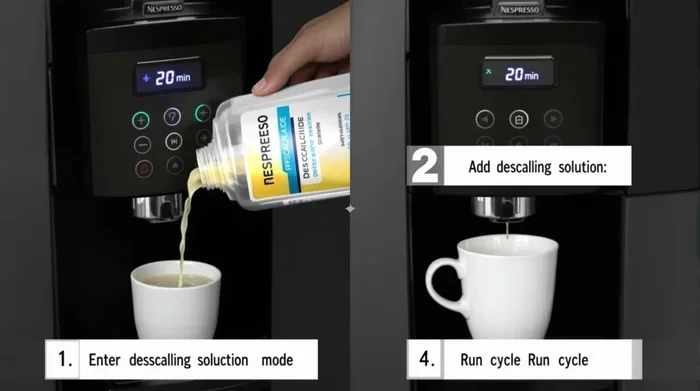
While those parts are drying, fill the water tank with your descaling solution mixed with fresh water. If you are using the Nespresso descaling solution, follow the dilution instructions on the bottle. For vinegar or citric acid, the ratios mentioned above work perfectly.
Step 2: Run the Descaling Cycle
Place a large container or mug under the coffee outlet. Plug the machine back in and turn it on. If your model has a descaling mode, activate it now. If not, simply start a normal brewing cycle without a capsule inserted.
Let the machine run until about half of the solution has passed through. Then turn the machine off and let it sit for about 15 minutes. This dwell time allows the solution to break down the mineral deposits inside the pipes and heating element.
Step 3: Complete the Cycle
After the 15-minute break, turn the machine back on and let the rest of the solution flow through into the container. Once the tank is empty, refill it with clean water and run another full cycle. Repeat this rinsing process two to three times to make sure all traces of the descaling solution are gone.
This is an important step. Leaving descaling solution residue in the machine can affect the taste of your coffee and may even damage internal components over time. Keep rinsing until the water smells and tastes completely clean.
Step 4: Clean the Exterior and Removable Parts
While you are at it, wipe down the outside of the machine with a damp cloth. Clean the coffee outlet and any visible parts where coffee residue tends to build up. You can also use a slightly damp cloth to clean the capsule outlet area. This keeps the machine looking good and prevents stale coffee oils from contaminating your next brew.
If you want to go the extra mile, check out our guide on how to clean oven with burnt food for deep-cleaning techniques that can inspire a thorough cleaning routine for all your kitchen appliances.
Step 5: Reassemble and Brew
Once everything is clean and dry, put all the removable parts back in place. Fill the water tank with fresh, clean water. Run one more quick brewing cycle without a capsule to flush any remaining traces. Now your Nespresso machine is fully descaled and ready to brew delicious coffee again.
Common Mistakes to Avoid When Descaling
Even though descaling is straightforward, there are a few mistakes people make that can cause problems. Here is what to watch out for.
- Skipping the rinse cycles: This is the most common mistake. Not rinsing thoroughly leaves a chemical taste in your coffee and can harm the machine.
- Using the wrong descaling solution: Avoid bleach, harsh chemicals, or abrasive cleaners. Stick to Nespresso-approved solutions or mild natural alternatives like citric acid.
- Descaling too infrequently: Ignoring the signs of limescale buildup leads to reduced water flow, poor coffee quality, and eventually machine failure.
- Forgetting to clean removable parts: Descaling the internal system is only half the job. The capsule container and drip tray need regular cleaning too.
- Running the machine without water: Never start a brewing cycle with an empty water tank. This can damage the heating element.
If you ever find yourself deep-cleaning other kitchen appliances, remember that a thorough approach works everywhere. For instance, our guide on how to deep clean Ninja Air Fryer Oven shares similar principles of removing buildup and maintaining performance.
Natural vs Chemical Descaling Solutions
There is an ongoing debate about whether to use a commercial descaler or a natural alternative. Both options have their pros and cons. Let us compare them so you can decide what works best for you.
| Feature | Commercial Descaler | Natural Alternative (Vinegar/Citric Acid) |
|---|---|---|
| Effectiveness | Very high | High |
| Ease of Use | Pre-measured and formulated | Requires mixing |
| Smell | Mild or no odor | Vinegar can leave a slight smell |
| Cost | Higher | Very affordable |
| Machine Safety | Designed for Nespresso machines | Safe if used in correct amounts |
| Residue | Minimal | May require extra rinsing |
For most people, the Nespresso descaling solution is the easiest and safest option. It is specifically formulated for these machines and leaves no residue or odor. However, if you prefer a budget-friendly and eco-conscious choice, citric acid is an excellent alternative. It is natural, effective, and very affordable.
If you are interested in learning more about maintaining your kitchen appliances, our article on how to reheat brats in oven includes helpful maintenance tips for kitchen equipment that apply broadly.
Tips to Keep Your Nespresso Machine in Top Shape
Descaling is the most important maintenance task, but it is not the only one. Here are some extra tips to keep your Nespresso machine running smoothly for years.
- Use filtered water: This reduces mineral buildup and means you descale less often. It also improves the taste of your coffee.
- Clean the capsule outlet regularly: Wipe it down after every few uses to prevent stale coffee from building up.
- Run a water-only cycle weekly: This flushes out any residual coffee oils and keeps the internal system clean between descaling sessions.
- Empty and dry the capsule container: Do not leave used capsules sitting in the container for days. Empty it regularly to prevent odors and mold.
- Descale even if the machine seems fine: Limescale builds up silently. By the time you notice a drop in performance, there may already be significant buildup inside.
Taking care of your Nespresso machine is an investment. A well-maintained machine can last for years and produce consistently great coffee. It takes just a little time and attention, but the payoff is huge.
Signs Your Nespresso Machine Needs Descaling Now
Sometimes you forget to descale on schedule. How do you know when it is already overdue? Here are the warning signs to watch for.
- The brewing time has increased: If your coffee takes noticeably longer to pour, limescale is likely restricting water flow.
- The coffee tastes different: A sour, metallic, or flat taste can indicate mineral buildup affecting the brewing temperature and water contact with the coffee.
- Unusual noises during brewing: Gurgling or clicking sounds can mean water is struggling to pass through clogged passages.
- The descaling light is on: If your model has an indicator, do not ignore it. The machine is literally telling you it needs attention.
- Visible white deposits: Check the water tank and coffee outlet for any white, chalky residue. This is a clear sign of limescale.
If you notice any of these signs, do not wait. Descaling as soon as possible prevents further damage and keeps your coffee tasting its best.
Can You Use Lemon Juice to Descale a Nespresso Machine?
Yes, you can. Lemon juice is a natural acid that works similarly to citric acid or vinegar. It is a good option if you do not have either of those on hand. However, lemon juice is less concentrated than pure citric acid, so you may need to use more of it for the same descaling effect. Mix the juice with water and follow the same process described above. Just be sure to rinse thoroughly afterward, as lemon juice can leave a slight flavor residue if not flushed out completely.
How Long Does the Descaling Process Take?
The entire process takes about 20 to 30 minutes. This includes the preparation time, the descaling cycle itself, and the rinsing cycles. The actual machine time is around 15 to 20 minutes. The rest of the time is spent washing removable parts and letting the solution sit during the dwell period. It is a small investment for a machine that keeps giving you great coffee day after day.
What Happens If You Never Descale Your Nespresso Machine?
Skipping descaling leads to a gradual decline in performance. At first, you might just notice slightly off-tasting coffee. Over time, the limescale buildup restricts water flow, reduces brewing temperature, and can eventually cause the machine to malfunction. In severe cases, you may need costly repairs or even a replacement machine. Regular descaling is the single easiest way to avoid all of these problems and extend the life of your Nespresso.
Final Thoughts
Descaling your Nespresso machine is one of the simplest and most important things you can do as a coffee lover. It takes less than half an hour, costs very little, and makes a noticeable difference in every cup you brew. Whether you use a commercial descaler or a natural alternative like citric acid, the key is to stay consistent and do it every three to six months.
Remember to rinse thoroughly, clean all removable parts, and use filtered water to keep things running smoothly between sessions. Your Nespresso machine works hard every day to deliver that perfect cup of coffee. A little maintenance goes a long way in keeping it happy and performing at its best.
So go ahead, gather your supplies, and give your machine the care it deserves. Your taste buds will thank you with every single sip.
Frequently Asked Questions
Can I use vinegar to descale my Nespresso machine?
Yes, white vinegar is a safe and effective natural descaling option. Mix it with equal parts water and run it through the machine. Just be sure to rinse thoroughly afterward to remove any lingering vinegar taste.
How do I know when my Nespresso machine needs descaling?
Most Nespresso machines have a built-in descaling indicator light. If your model does not have one, look for signs like slower brewing, off-tasting coffee, or visible white deposits inside the machine.
What is the best descaling solution for Nespresso machines?
The Nespresso-branded descaling solution is specifically designed for these machines and is the safest option. Citric acid and white vinegar are excellent budget-friendly alternatives that work just as well.
How often should I descale my Nespresso machine?
Every three to six months is the general recommendation. If you live in an area with hard water or use your machine daily, you may need to descale more frequently.
Can I skip rinsing after descaling?
No. Skipping rinse cycles can leave a chemical or acidic taste in your coffee and may damage internal components over time. Always rinse with clean water two to three times after descaling.
Is descaling the same as cleaning the Nespresso machine?
No. Cleaning refers to wiping down external parts and washing removable components. Descaling specifically targets mineral buildup inside the machine’s internal system. Both are important and should be done regularly.