Can Tofu Be Microwave Reheated Without Losing Its Texture
Can tofu be microwave reheated without losing its texture? Yes, it can — but the method you use matters a lot. Whether you have leftover crispy tofu, silken tofu, or firm tofu, microwaving can work wonders if you follow the right steps. This guide covers everything from tofu types to reheating techniques that preserve flavor and structure. You will learn quick tips, common mistakes, and expert-backed strategies to make your leftover tofu taste just as good as the first time.
So you made too much tofu again. Maybe you whipped up a delicious stir-fry or loaded a tofu scramble with veggies. Now you are staring at leftovers and wondering if reheating will ruin everything. The good news? Can tofu be microwave reheated without turning it into a sad, rubbery mess? Absolutely yes. But there is a right way and a wrong way to do it.
Microwaving tofu is one of the fastest ways to enjoy your leftovers. Whether you prefer crispy baked tofu, grilled tofu cubes, or soft tofu scramble, the microwave can help you get back to eating in minutes. The trick is understanding how tofu behaves when heated again. Tofu is unique because it holds water differently than meat or cheese. That means your reheating method needs to account for moisture and texture. In this guide, we will walk you through everything you need to know about microwave reheating tofu the smart way.
We will cover the best types of tofu for the microwave, the step-by-step process, common mistakes, and expert tips that make a huge difference. By the end, you will never have to worry about soggy or overcooked leftover tofu again. Let us dive in.
Key Takeaways
- Yes, tofu can be microwave reheated: With the right technique, you can reheat tofu without turning it rubbery or soggy.
- Tofu type matters: Firm and extra-firm tofu reheat better than silken or soft varieties in the microwave.
- Moisture control is key: Patting tofu dry before reheating prevents steaming and preserves crispiness.
- Short bursts work best: Microwaving in 30-second intervals helps maintain even heating and texture.
- Avoid covering tightly: Letting steam escape keeps tofu from becoming waterlogged and mushy.
- Storage affects results: Properly stored leftover tofu reheats much better than tofu left out overnight.
- Add oil after reheating: A light toss in oil after microwaving restores the crispy exterior.
📑 Table of Contents
- Can Tofu Be Microwave Reheated Without Losing Its Texture?
- Understanding Different Tofu Types and Microwave Behavior
- Step-by-Step Guide to Reheating Tofu in the Microwave
- Common Mistakes That Ruin Reheated Tofu
- Expert Tips for Keeping Tofu Crispy and Delicious
- How Tofu Storage Affects Reheating Results
- Frequently Asked Questions
- Conclusion
Can Tofu Be Microwave Reheated Without Losing Its Texture?
The short answer is yes. But the longer answer depends on a few factors. When you reheat tofu in the microwave, the heat causes water molecules inside the tofu to vibrate and produce steam. If that steam has nowhere to go, it gets trapped and makes the tofu soggy. That is the number one enemy of good texture.
The good news is that you can control this process. By adjusting how you prepare, place, and time your microwave session, you can keep your tofu tasting fresh. Firm tofu and extra-firm tofu handle microwaving far better than soft or silken varieties. This is because they have less water content and a denser structure. Think of it like bread — a thick slice of crusty bread holds up better in the microwave than a fluffy piece of white bread.
When you microwave leftover tofu correctly, you can preserve its original flavor, shape, and even some of its crispiness. The key is working with the tofu, not against it. Small changes in preparation make a massive difference in the final result.
Why Texture Changes During Reheating
To understand how to prevent texture loss, you need to understand what happens at a microscopic level. Tofu is made from soy milk that has been coagulated and pressed into blocks. Inside that block are tiny pockets of water held together by a protein network. When you first cook tofu, you drive out some of that moisture. This is what gives crispy pan-fried tofu its satisfying crunch.
When you reheat tofu, the microwave rapidly heats that trapped moisture. The steam expands and pushes against the protein structure. If the tofu was already cooked and dried out, this process is less dramatic. But if the tofu is still wet, the steam can break down the structure and leave you with a mushy result. This is why draining and patting tofu dry before reheating is so important.
Understanding Different Tofu Types and Microwave Behavior
Not all tofu is created equal when it comes to reheating. The type of tofu you have determines how well it will survive the microwave. Let us break down the most common varieties and what to expect.
Firm and Extra-Firm Tofu
Firm tofu and extra-firm tofu are your best friends for microwave reheating. They have the least amount of moisture and the densest protein structure. This means they hold their shape well and are less likely to turn rubbery or mushy. If you made baked tofu bites, tofu nuggets, or crispy tofu cubes, these will reheat beautifully in the microwave.
Extra-firm tofu is especially forgiving. Even if you accidentally overheat it by a few seconds, it still maintains a decent texture. This makes it the ideal choice for quick microwave meals during busy weekdays.
Soft and Silken Tofu
Silken tofu and soft tofu are a completely different story. These varieties have a high water content and a delicate, custard-like structure. When you microwave them, the steam builds up rapidly and can cause the tofu to collapse or fragment. Reheated silken tofu often becomes grainy and watery.
That does not mean you cannot reheat silken tofu at all. It just means the microwave is not the best tool for the job. If you must use the microwave, do so at the lowest power setting and in very short intervals. Better yet, consider reheating silken tofu dishes on the stovetop over low heat.
Smoked and Marinated Tofu
Smoked tofu and marinated tofu add extra flavor to reheated dishes. The smoking process dries out the surface, which actually helps it hold up better in the microwave. Marinated tofu can sometimes leak flavor during reheating, so placing it on a paper towel-lined plate helps absorb excess liquid and keeps the taste intact.
Step-by-Step Guide to Reheating Tofu in the Microwave
Now that you understand the science and the tofu types, let us get into the practical steps. Follow this method for the best results every time you reheat leftover tofu in the microwave.
Step 1: Remove Tofu from the Refrigerator
Take your leftover tofu out of the fridge about five minutes before reheating. Letting it come closer to room temperature helps it heat more evenly. Cold tofu straight from the fridge can heat unevenly, leaving some parts scalding hot and others still cold.
Step 2: Pat the Tofu Dry
This is the most important step. Use a clean paper towel or kitchen cloth and gently press down on the tofu to absorb surface moisture. If your tofu was in a sauce, try to remove as much liquid as possible before placing it in the microwave. Excess moisture is the enemy of crispy reheated tofu.
Step 3: Arrange on a Microwave-Safe Plate
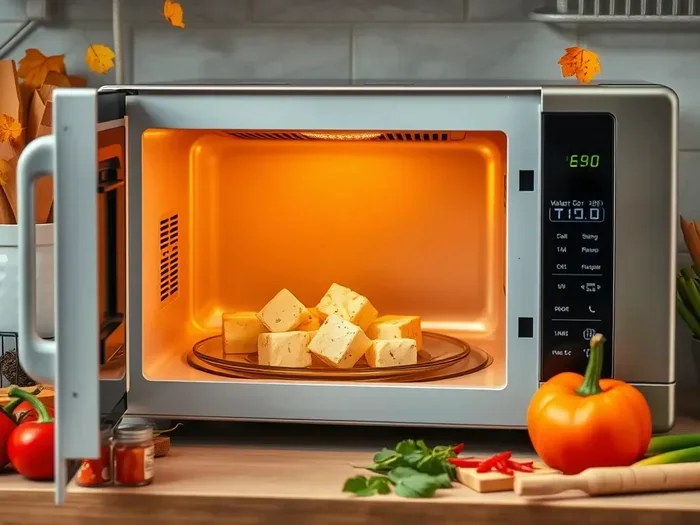
Place the tofu pieces on a microwave-safe plate lined with a fresh paper towel. Do not stack the pieces on top of each other. Spacing them out allows steam to escape and heat to circulate evenly. If you are reheating a tofu dish with sauce, keep the sauce separate if possible.
Step 4: Cover Loosely
Use a microwave-safe lid or a damp paper towel to cover the plate. The key word here is loosely. You want to trap some heat but still allow steam to vent. A tightly sealed cover will trap all the moisture and steam the tofu soggy. Think of it like a loose tent, not a sealed box.
Step 5: Microwave in Short Intervals
Set your microwave to medium power or 50-70% power. Heat the tofu in 30-second intervals. This prevents overheating and gives you control over the final texture. Between each interval, check the tofu and flip the pieces if needed. Most firm tofu pieces need about 60 to 90 seconds total.
Step 6: Let It Rest
Once the tofu is heated through, let it sit on the counter for 30 seconds. This resting period allows the heat to distribute evenly throughout the piece. It also gives the surface a chance to dry out slightly, which improves texture.
Step 7: Add a Finishing Touch
If you want to restore some crispiness, toss the reheated tofu in a tiny bit of oil right after microwaving. A light spray of olive oil or sesame oil works wonders. You can also add a sprinkle of salt or your favorite seasoning at this point for extra flavor.
Common Mistakes That Ruin Reheated Tofu
Even with the best intentions, it is easy to make mistakes when reheating tofu. Here are the most common errors and how to avoid them.
Overheating the Tofu
One of the biggest mistakes is microwaving tofu for too long at full power. High heat causes the water inside the tofu to boil rapidly, which breaks down the protein structure. The result is rubbery, tough, or crumbly tofu. Always use medium power and short intervals.
Stacking Tofu Pieces
It might be tempting to pile all your leftover tofu into one stack to save time. Resist this urge. Stacked tofu traps steam between the pieces, which leads to uneven heating and a soggy texture. Spread the pieces out in a single layer for the best results.
Skipping the Dry Step
We cannot stress this enough. If you do not pat your tofu dry before reheating, you are practically guaranteeing a mushy outcome. Surface moisture turns into steam inside the microwave, and that steam does your texture no favors.
Reheating Tofu That Has Been Left Out
Food safety matters. Tofu that has been sitting at room temperature for more than two hours should not be reheated and eaten. Always store leftover tofu in the refrigerator promptly. Proper tofu storage also preserves its quality for reheating later.
Using the Wrong Container
Not all containers are safe for the microwave. Avoid metal containers, decorative plates with metallic trim, and plastic containers that are not labeled microwave-safe. Stick to glass, ceramic, or microwave-safe plastic for the best and safest results.
Expert Tips for Keeping Tofu Crispy and Delicious
Want to take your reheated tofu to the next level? These expert-backed tips will help you achieve restaurant-quality results every time.
Use a Microwave Crisper Pan
If you have a microwave crisper pan, now is the time to use it. These special pans are designed to absorb moisture and create a crispy surface. Place your tofu on the crisper plate and microwave as usual. The result is far superior to using a regular plate.
Reheat Sauces Separately
If your tofu is sitting in a sauce, consider reheating the sauce on its own first. Pour the sauce into a microwave-safe bowl and heat it for 30 seconds. Then add the tofu and heat them together for a short time. This prevents the tofu from sitting in excess liquid, which is a major cause of soggy texture.
Refresh the Crust After Reheating
For an extra crispy finish, you can quickly pan-fry reheated tofu in a hot skillet with a little oil for 30 seconds on each side. This is not strictly microwave reheating, but it works beautifully as a follow-up step. You get the speed of the microwave with the crunch of a stovetop finish.
Season After Reheating
Flavors can dull during reheating. Add a fresh sprinkle of spices, a squeeze of lemon, or a drizzle of soy sauce after the tofu is heated. This brightens the taste and makes the reheated dish feel just as vibrant as when it was first made.
Batch Cook for Better Reheating
When meal prepping, cook your tofu in smaller, portioned pieces rather than one large block. Smaller pieces reheat more evenly and are much easier to work with in the microwave. This simple batch-cooking trick saves time and improves results dramatically.
How Tofu Storage Affects Reheating Results
The way you store leftover tofu has a direct impact on how well it reheats. Proper storage preserves moisture balance and flavor, making the microwave reheating process much smoother.
Best Containers for Storing Tofu
Store leftover tofu in an airtight container in the refrigerator. Glass containers with snap-on lids work great. You can also use the original tofu container if it seals well. Avoid storing tofu in an open bowl or wrapped in a loose cloth, as this exposes it to air and causes it to dry out or absorb fridge odors.
How Long Can You Store Cooked Tofu?
Cooked tofu stays fresh in the refrigerator for up to three to four days. After that, the quality declines and the texture becomes less predictable when reheated. For longer storage, consider freezing cooked tofu. Frozen tofu actually reheats differently and can develop a chewier, more meat-like texture that many people enjoy.
Freezing and Reheating Tofu
Freezing cooked tofu is a great option for meal preppers. When you freeze tofu, the water inside forms ice crystals that expand and create small pockets in the protein structure. When you thaw and reheat this frozen tofu, it absorbs sauces better and has a spongier, chewier texture. Many people prefer frozen-then-reheated tofu over freshly cooked tofu for certain dishes.
Frequently Asked Questions
Can I reheat tofu that has been in the fridge for a week?
It is not recommended. Cooked tofu should be consumed within three to four days for both safety and quality. After a week, the risk of bacterial growth increases and the texture will likely be poor even if you reheat it carefully. Always check for signs of spoilage like off smells or slimy surfaces before reheating any leftover tofu.
Why does my reheated tofu taste different?
Tofu absorbs flavors differently when reheated. The microwave heats the protein structure unevenly, which can mute seasonings. Also, the drying effect of microwave heat changes the surface texture, which affects how your taste buds perceive the flavor. Adding fresh seasoning after reheating usually fixes this problem.
Is it safe to microwave tofu multiple times?
While it is technically safe if the tofu has been stored properly in the fridge, repeated reheating degrades the texture significantly each time. Each microwave session drives out more moisture and breaks down more protein structure. For the best results, only reheat the portion you plan to eat in one sitting.
Can I microwave tofu with vegetables together?
Yes, but be mindful of cooking times. Vegetables and tofu do not always reheat at the same rate. Dense vegetables like carrots and broccoli take longer to heat than tofu. Cut vegetables into small, uniform pieces and microwave them together at medium power in short intervals for the most even results.
Does microwaving tofu destroy its nutritional value?
Microwaving is actually one of the best cooking methods for preserving nutrients. The short cooking time and minimal water use help retain vitamins and minerals in tofu. Studies show that microwave heating preserves protein content and isoflavones in soy products better than some other cooking methods.
What is the best way to make reheated tofu crispy?
The best method is to microwave at medium power with short intervals, then finish with a quick pan-fry in a hot skillet with a thin layer of oil. This two-step approach gives you the speed of the microwave with the crispy texture that many people love. Alternatively, you can use a microwave crisper pan for a single-step crispy result.
Conclusion
The answer to can tofu be microwave reheated is a clear and confident yes. With the right approach, you can enjoy leftover tofu that tastes nearly as good as when it was first cooked. The key lies in understanding your tofu type, controlling moisture, using medium power, and reheating in short intervals. Whether you are working with firm tofu, extra-firm tofu, or even smoked tofu, these methods will help you preserve texture and flavor.
Avoid the common pitfalls like overheating, stacking pieces, and skipping the drying step. Follow the step-by-step guide, keep the expert tips in mind, and you will never have to eat sad, soggy reheated tofu again. Microwave reheating tofu is fast, convenient, and when done right, delivers results that make it well worth the effort. So go ahead, reheat that leftover tofu with confidence, and enjoy a delicious meal in minutes.